
Last updated November 15, 2026
 Wrought iron
 Wood & steel frame
 Farm & ranch
 Sliding driveway gates
 LiftMaster operators
Free on-site gate assessment - hinges, posts, and your LiftMaster or Nice gate operator checked before anything is quoted
The assessment is free and the quote is the invoice.
Get your free estimateGate Repair Maintenance Schedule: What to Do and When
The standard “lubricate every 90 days” advice comes from operator manuals written to cover every climate on the planet, and that’s why it’s wrong in both directions for a gate in Vacaville. Our dry summers bake hydraulic fluid and cook control boards in an enclosure that never gets a break, while our wet winters push moisture into limit switches and safety loop wiring that sat bone-dry since spring. A calendar-based checklist treats February and August the same, and your gate doesn’t. This guide replaces the generic schedule with one built around three things that actually drive wear: your operator type, your gate’s weight and duty cycle, and the seasonal swing Vacaville puts every system through.
Quick Answer
There’s no single correct maintenance interval for a gate. The real trigger is cycle count plus season, not calendar time: residential swing gates on a Linear or Viking operator typically need a mechanical inspection and lubrication every 1,500 to 2,000 cycles, while commercial high-cycle systems on a DoorKing or FAAC operator need service on a much tighter cycle-based schedule. In Vacaville, the seasonal jobs split cleanly – spring and fall are for hardware, lubrication and moisture checks, summer is for cooling, battery and control-board attention, and winter is for electrical enclosures, limit switches and drainage.
Styles & brands we work with
- Wrought iron
- Wood & steel frame
- Farm & ranch
- Sliding driveway gates
- LiftMaster operators
Table of Contents
- Why Generic Maintenance Schedules Fail in Vacaville
- The Seasonal Maintenance Breakdown for Vacaville’s Climate
- Duty Cycle: How Residential and Commercial Intervals Differ
- What You Can Do Yourself and What Needs a Technician
- Why Cycle Counts Beat Calendar Time
- Three Components to Replace Proactively
- Matching the Schedule to Your Operator Brand
- Building a Maintenance Record That Actually Works
Why Generic Maintenance Schedules Fail in Vacaville
Most gate maintenance advice you’ll find online is copied from an operator manual’s general section, written to survive a climate range from Minnesota to Miami. That means it over-lubricates for a dry summer and under-inspects for a wet winter, and it rarely accounts for the single biggest wear factor of all: how many times your gate actually opens and closes in a day. A gate at a single-family driveway in Vacaville might cycle six times a day. A gate at a multi-unit property off Merchant Street might cycle two hundred. Same schedule, wildly different wear. The manual doesn’t know the difference.
There’s a second issue specific to this area. Vacaville sits in a valley that swings hard between a hot, dry summer and a cool, damp winter. Metal expands in July and contracts by January. Wooden and composite gate panels move with that swing, which throws hinges, latches and guide rollers slightly out of alignment twice a year. If you’re only checking alignment once annually, you’re catching half the problem. The maintenance schedule that works here is seasonal, not quarterly.
- Heat damage is cumulative. Hydraulic fluid thins, seals degrade and control boards run hot inside an enclosure that’s in direct sun from late morning onward.
- Winter moisture is the hidden failure. Limit switches, photo-eye wiring and loop detector connections corrode slowly and fail suddenly, usually the first week it rains hard.
- Category matters more than brand. A residential-duty operator doing 200 cycles a day is being abused no matter how good the brand is.
- Calendar intervals hide the truth. A gate that sat idle all summer and a gate that ran 4,000 cycles in the same summer get the same “90-day” treatment today.
The Seasonal Maintenance Breakdown for Vacaville’s Climate
Think of the year as four distinct maintenance windows rather than four identical quarters. Spring is your recovery and alignment pass after winter moisture. Summer is about heat, batteries and electronics cooling. Fall is hinge, roller and track work before the wet season returns. Winter is your electrical and enclosure inspection, the one most people skip because the gate “still works.”
Spring: Recovery and Alignment
Winter leaves its marks in the form of moisture ingress at limit switches and safety loop connections, and slightly swollen or shifted gate panels. Spring is when you check the physical alignment of the gate relative to its posts, verify the latch engages cleanly, and confirm the operator’s limit positions are still where they should be. If the gate drags, binds or reverses mid-travel, the limits have drifted. This is the window to catch it.
Summer: Heat, Hydraulics and Batteries
Our dry summers are hard on hydraulic operators, which handle heat well as long as the fluid and seals are sound, and hard on control boards and backup batteries sitting inside a sun-exposed enclosure. Check the enclosure for airflow and shade. Backup batteries degrade faster in sustained heat, which is why we treat a battery check as a summer job, not an annual one. If you run a LiftMaster or Elite operator, that battery is what opens the gate when the power goes out.
Fall: Hardware and Moving Parts
Before the wet season returns, work the moving parts: hinges, rollers, track, drive chain or belt and the gate’s guide system. This is the window for lubrication and for checking that nothing has worked loose over the dry months. A dry summer followed by the first rain is exactly when a marginal roller or hinge turns into a real problem, and it’s cheaper to catch it now than on a Monday morning when the gate won’t fully retract.
Winter: Electrical and Moisture
Winter is an electrical inspection season. Photo-eyes, safety loop detectors, control-board connections and enclosure seals all need a look while the weather is doing its worst. This is also when drainage matters: if water pools at the base of a slide gate track, it accelerates corrosion and can lift a gate slightly off its rollers. Clear the track, check the low spots, confirm seals are intact.
Duty Cycle: How Residential and Commercial Intervals Differ
Duty cycle is the number of operations a gate performs per hour or per day, and it’s the single most important number in your maintenance plan. A residential swing gate on a Ghost Controls operator serving a single household and a commercial slide gate on a DoorKing operator serving a business park are engineered to completely different thresholds. Applying the residential schedule to a commercial gate under-maintains it badly, and applying a commercial schedule to a residential gate is wasted money.
- Residential duty: typically fewer than 20 cycles per day. Mechanical inspection and lubrication every 1,500 to 2,000 cycles is a sound baseline. Many homeowners are under-maintaining here because they assume “once a year” is enough.
- High-cycle commercial: dozens to hundreds of cycles per day. Service intervals tighten dramatically and should be tracked by cycle count, not by the month. Many property managers over-maintain in some areas while missing the things that actually matter.
- What changes with duty cycle: lubrication frequency, drive chain or belt inspection, hinge and roller wear, motor cooling, and how quickly safety devices should be functionally tested.
- The trap of “it still works”: a high-cycle gate can pass a casual check while its chain tension and roller wear are silently out of spec.
If you don’t know your gate’s practical cycle count, start by estimating it: count a typical day’s openings and multiply by the days of the week you actually use it. That estimate is your starting point, and a technician can refine it during the first service visit.
What You Can Do Yourself and What Needs a Technician
Some maintenance tasks are safe and worth doing yourself if you’re reasonably handy and have the right tools. Others aren’t, and it’s not about difficulty. They’re about the risk of a heavy gate panel, live wiring or an operator that can move unexpectedly.
Safe to Do Yourself
- Clearing debris from the track, rollers and the gate’s travel path.
- Visual inspection of hinges, latches and rollers for cracks or excessive play.
- Lubricating hinges and rollers with the manufacturer’s recommended lubricant, applied to the right points and not over-applied.
- Checking that photo-eyes and safety devices are clean and unobstructed. Never bypass a safety device, ever.
- Testing the manual release per the operator manual (on a residential swing gate, this is a safe procedure when done correctly).
- Keeping a written log of cycles, service dates and any symptoms you notice.
Needs a Technician
- Anything involving 120V or 240V supply wiring, control boards or operator internals. This is live electrical work on a system that moves under its own power.
- Diagnosing a gate that reverses unexpectedly, won’t complete a cycle or trips its own safety limits. Those symptoms can come from limits, sensors, control board or a slipping drive, and misadjusting limits can crush a panel or a person.
- Slide gate tracks that need re-alignment or drive chain replacement.
- Safety loop detector replacement and any work on the buried or surface loop wiring.
- Commercial gate systems, where crushing force and cycle counts make the stakes much higher.
If you’re in doubt, it belongs in the technician column. A gate is a piece of motorized machinery with stored energy in the operator’s drive and real weight in the panel. A trained eye catches the problems a checklist can’t, and it’s exactly what electric gate repair is built for when something has already failed.
Why Cycle Counts Beat Calendar Time
Professionals schedule mechanical service by cycle count, not calendar time, because cycles represent actual wear. A calendar is a convenience. Your gate’s wear is determined by how many times the motor started, the chain or belt moved, the hinges turned and the control board switched. If you’re not tracking cycles, you’re guessing.
- Establish a baseline. Count openings on a typical day. Multiply by your typical week, then month. For a household that’s often 6 to 10 per day; for a commercial site, count or ask the property manager.
- Estimate current cycles. If you don’t have historical data, use the gate’s known service history or have a technician assess wear to infer cumulative cycles.
- Set your trigger points. Mechanical inspection and lubrication at your cycle threshold, safety device testing at a fixed lower threshold, and electrical inspection seasonally.
- Log every service. Date, cycle estimate, what was done, what was replaced. This log becomes the most valuable document you own for that gate.
- Re-baseline when usage changes. If a property’s occupancy changes or a new tenant adds traffic, recalculate.
Most homeowners in Vacaville are under-maintaining because they’ve never tracked a cycle. Most HOAs and commercial properties are over-maintaining in the wrong places while missing chain tension and roller wear. The cycle log fixes both errors.
Three Components to Replace Proactively
Three components on a gate system have predictable replacement windows. Replacing them ahead of failure costs less than an emergency call, and it avoids the situation where a gate locks your property at an inconvenient moment. We recommend these as scheduled work, not repairs.
1. Battery Backup
Battery backup on operators like LiftMaster reserves the ability to open the gate when the power is out. High summer heat degrades sealed batteries faster than cool environments, so a proactive replacement interval matters here. Test annually, replace on a schedule tied to age and performance, and never let a backup battery fail silently.
2. Safety Loop Detector
Loop detectors on automatic gates, especially commercial systems using DoorKing, are the part that prevents the gate from closing on a vehicle or a person. They’re electronic and they do fail. A proactive replacement at a known age, combined with functional testing, removes the risk of a detector failing in a way that eventually lets the gate act as though the vehicle isn’t there.
3. Drive Chain or Belt
Chain and belt drives stretch and wear predictably with cycles. A chain that’s past its wear limit will eventually slip, jump or break. Inspect at every service, measure wear if the operator manual gives a spec, and replace at the wear limit rather than the failure point. On a slide gate in Vacaville, this is one of the most common causes of “the gate won’t open” calls, and it’s almost always preventable.
Matching the Schedule to Your Operator Brand
Every brand has its own maintenance preferences and its own predictable failure points. A schedule written for a Viking operator doesn’t map perfectly onto a Linear or a FAAC, and it certainly doesn’t map onto a commercial DoorKing system. Knowing your operator means knowing what to check and when. That’s why we work across the nine major brands rather than pushing everyone toward a replacement:
- Residential entry-level and mid-tier: Mighty Mule, Ghost Controls, Linear, Viking and Elite. On these, hinge and roller wear, drive chain and battery backup are the high-attention items.
- Professional and commercial: LiftMaster, FAAC, BFT and DoorKing. On these, cycle count, loop detector function, control-board integrity and safety device testing dominate the checklist.
- Hydraulic versus electromechanical: hydraulic operators (common in FAAC and some BFT systems) need fluid and seal attention; electromechanical operators need chain, belt and limit attention.
If you’re not sure which operator you have, our Gate Repair Vacaville team can identify it from the enclosure, control board or remote, and we’ll build the schedule around that specific unit rather than a generic one.
Building a Maintenance Record That Actually Works
The maintenance record is the part everyone skips and the part that pays off. A simple log, kept with the operator manual, tells a technician what’s been done, when and at what cycle count, so future service can be targeted rather than guessed. It also tells you when a component is approaching its replacement window.
- Record the basics: operator brand and model, gate type (swing or slide), gate weight if known, and the power supply.
- Log every service visit: date, estimated cycle count, tasks performed, parts replaced and any observations about wear.
- Log every DIY check: date and what you checked. A monthly visual of hinges and rollers takes minutes and builds the record.
- Log symptoms between visits: a gate that reverses occasionally or hesitates at one end of travel is signalling a limit or safety issue worth flagging early.
- Keep the log with the gate, not the office. Inside the operator enclosure (in a weatherproof pouch) or on the inside of the gate post works well.
When something does go wrong, that log turns a diagnosis visit into a repair visit. That’s the difference between a fast fix and a long day.
Common Mistakes to Avoid
- Lubricating on a calendar instead of a cycle count. Over-lubricating in summer attracts grit that wears hinges faster than dry running, and under-lubricating in winter lets moisture do the damage. Use cycles and season together.
- Assuming “it still works” means it’s fine. Safety loop detectors and backup batteries fail quietly. Test them on a schedule, not on a hunch.
- Bypassing a safety device to “fix” a gate that won’t close. Never do this. It removes the one thing that prevents a gate from closing on a person or a vehicle.
- Applying a commercial schedule to a single-family gate. Most residential gates in Vacaville are being under-maintained, not over-maintained, but the reverse also happens on HOA properties.
- Ignoring drainage at the base of a slide gate. A track sitting in standing water through the wet season corrodes and lifts rollers. Clear the low spots before the rain arrives.
- Treating a failing operator as a reason to replace the whole gate. Most failures are one component, not the whole system. Repair first, replace only when the operator is genuinely at end of life.
- Not keeping a log. Without a maintenance record, every service visit starts from scratch and every diagnosis takes longer.
See the difference
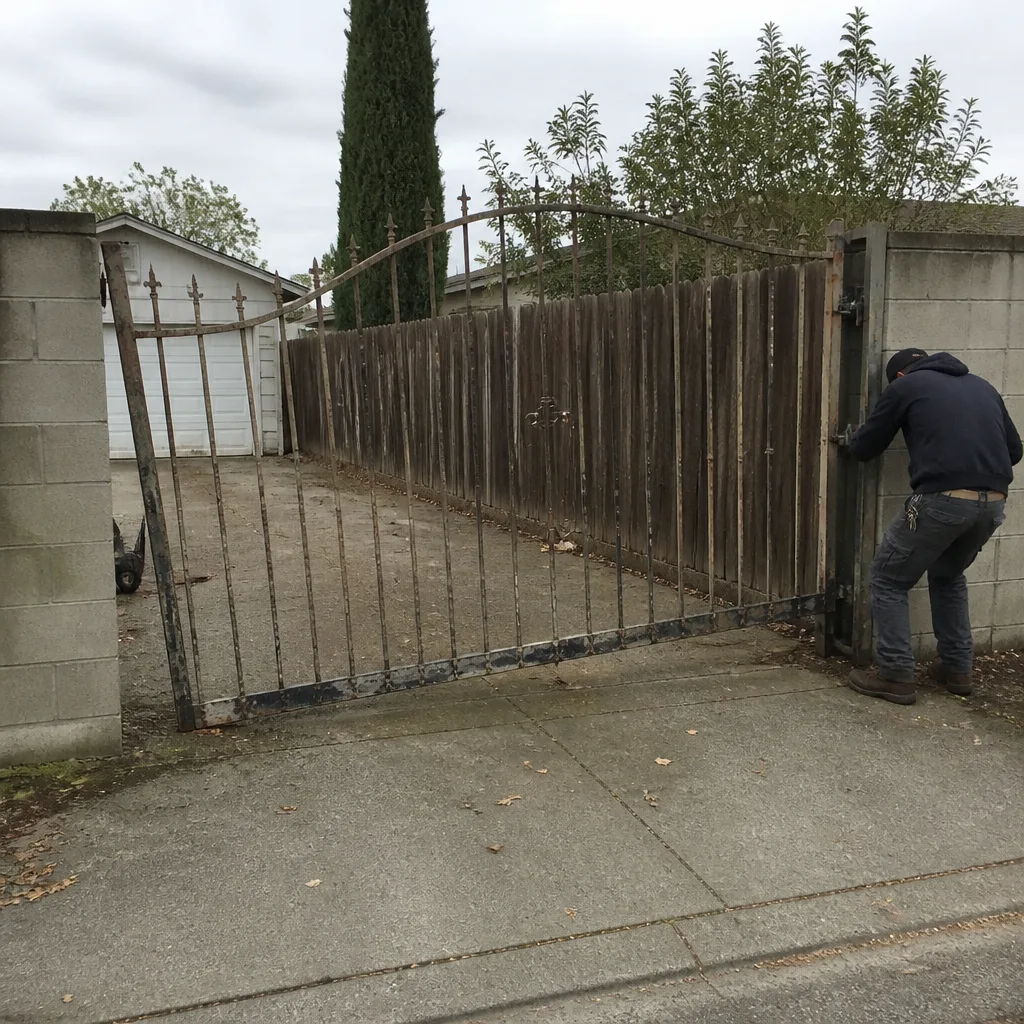 Before
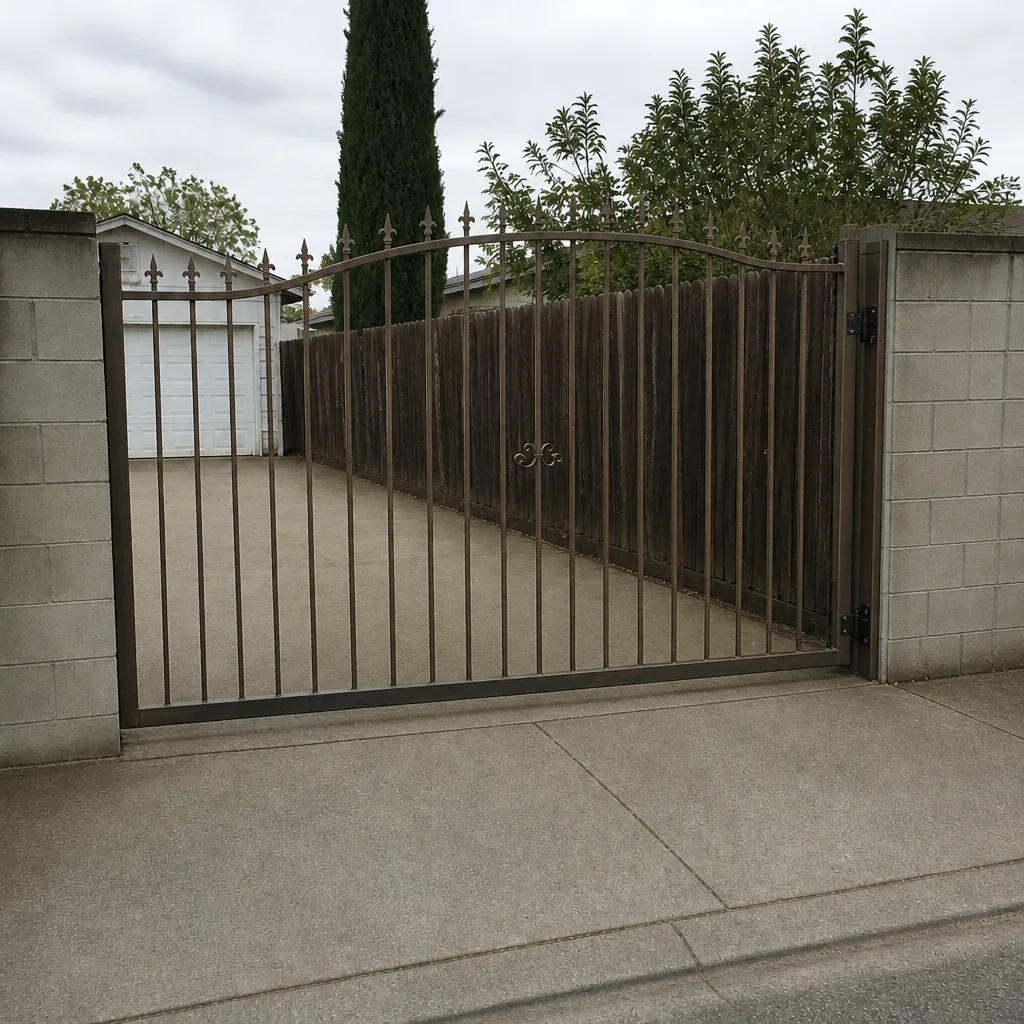 After
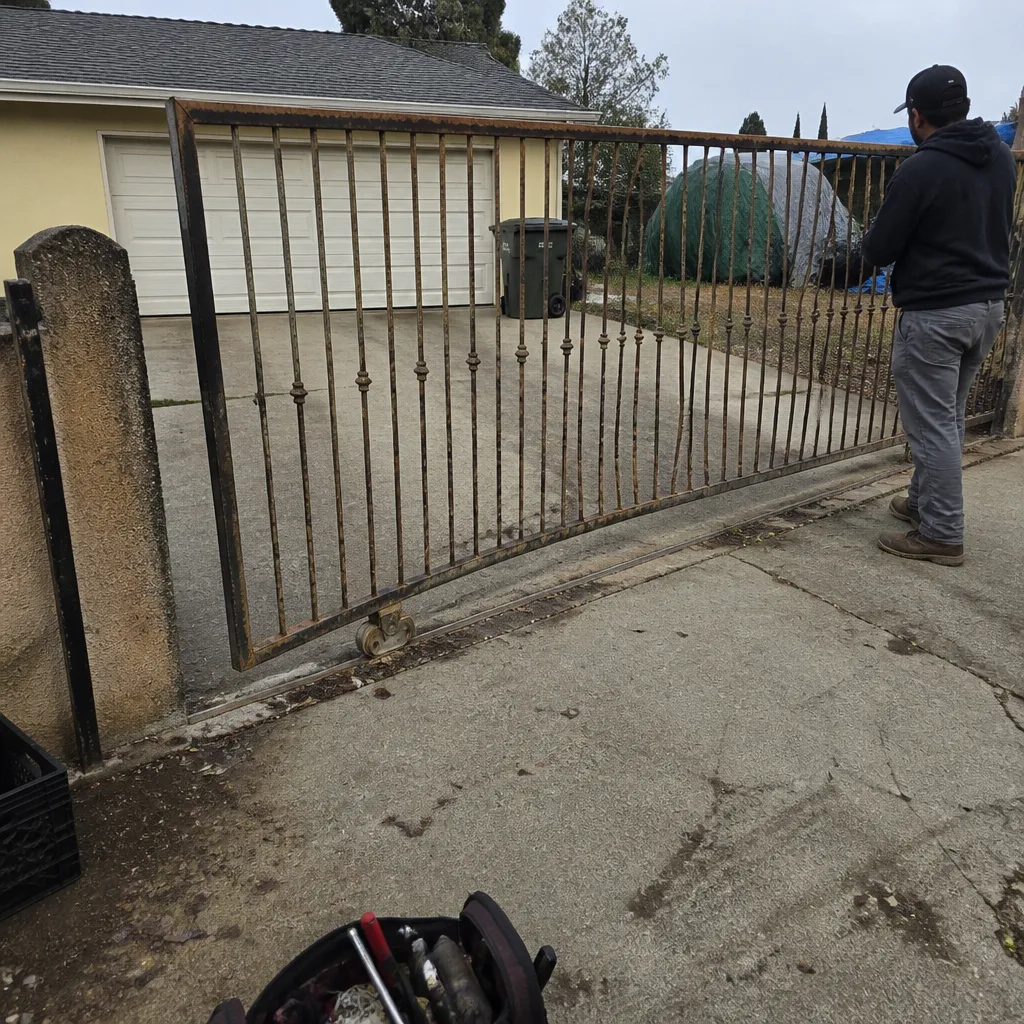 Before
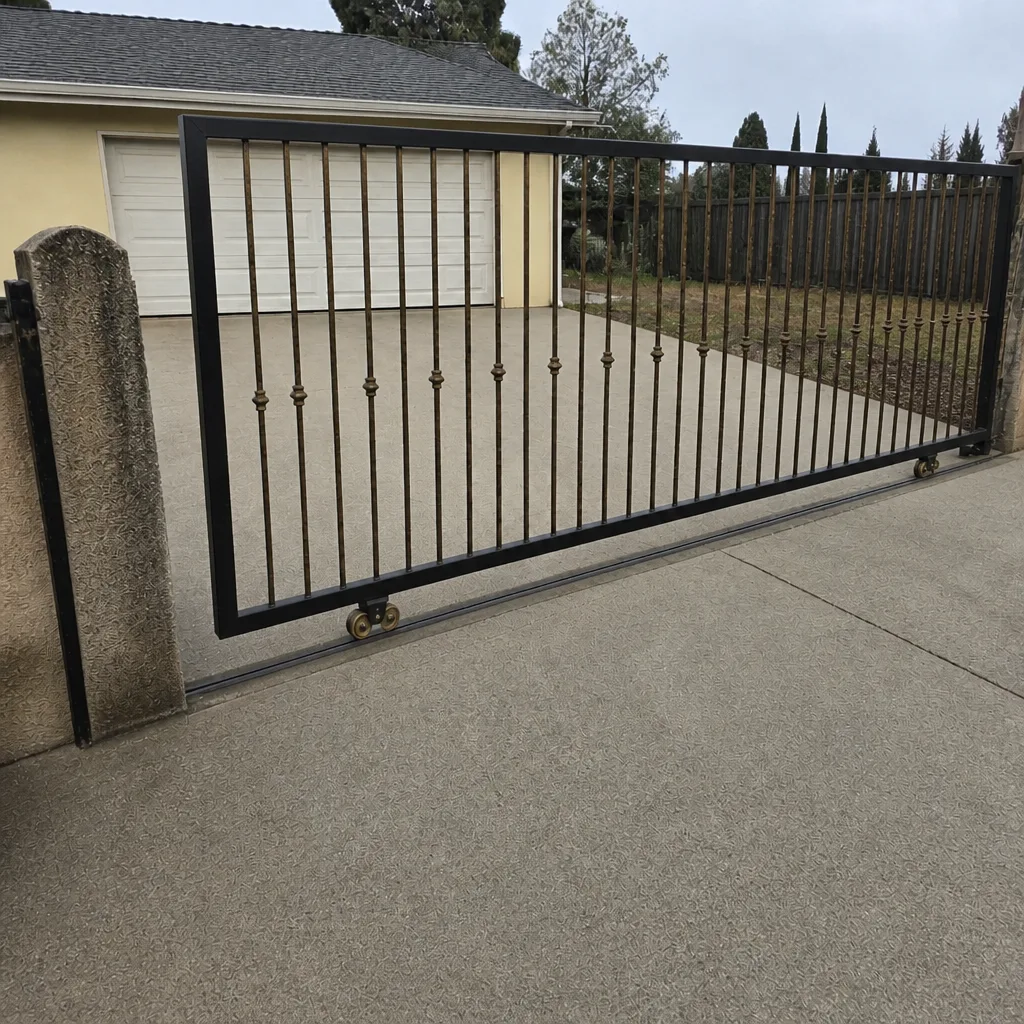 After
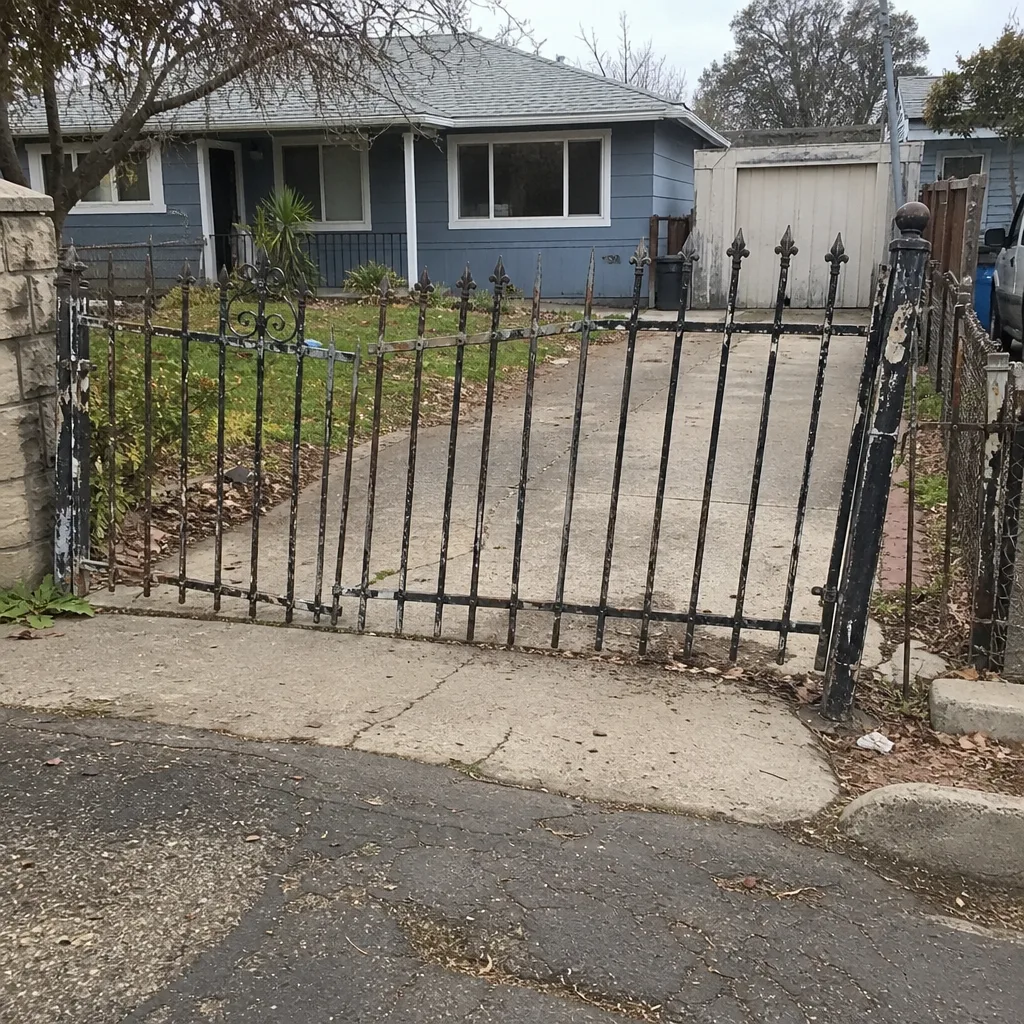 Before
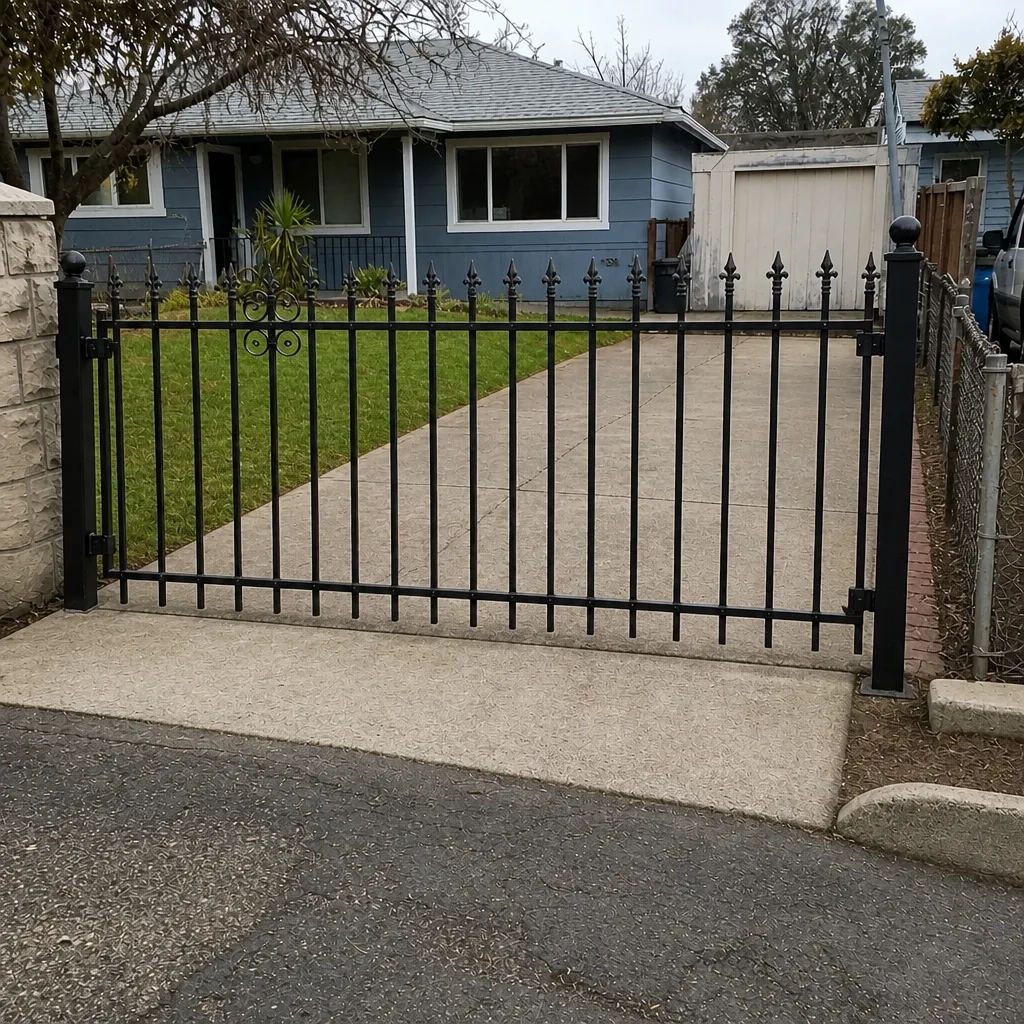 After
When to Call a Professional
Call a technician when the gate reverses unexpectedly, won’t complete a full cycle, trips its own safety limits, or stops responding altogether. Anything involving live supply wiring, control boards, operator internals or a slide gate track is a professional job, not a homeowner task, and the risk of a crushing panel or a live electrical fault is real. For commercial high-cycle systems, or when you aren’t sure which operator you’re working with, a professional assessment builds the schedule correctly from the start. Gate Repair Vacaville offers free estimates in Vacaville. Call (888) 772-3933. We answer 24/7. Fast dispatch from 7am to 7pm, Sunday through Friday.
Frequently Asked Questions
Service by cycle count, not just by the calendar. As a baseline, inspect and lubricate residential gates every 1,500 to 2,000 cycles, and on commercial high-cycle systems follow a tighter cycle-based schedule. Then add seasonal checks for the wet and dry halves of the year. Call (888) 772-3933 for an exact quote on a service visit – estimates are free.
Yes. Cycle count is the wear metric that professionals use because it reflects actual motor starts, hinge turns and control board switches. A calendar is only a convenience. Track cycles and you’ll know when mechanical service is genuinely due. Call (888) 772-3933 if you want help setting up a cycle log.
Never work on supply wiring, control boards, operator internals or safety loop detectors yourself, and never bypass a safety device to get the gate to close. Those tasks involve live electrical components or a gate that can move unexpectedly. Call (888) 772-3933 and let a technician handle the electrical side – estimates are free.
We work across nine major brands: LiftMaster, FAAC, BFT, Linear, Viking, Ghost Controls, DoorKing, Elite and Mighty Mule. That covers residential entry-level and mid-tier operators as well as professional-grade commercial systems. Call (888) 772-3933 for an exact quote.
Call us. Wet-season failures are most often limit switches, photo-eye wiring or loop detector connections, and they need diagnosis, not guesswork. We answer 24/7, and a call outside dispatch hours is booked into the next opening, Sunday through Friday, 7am to 7pm. Call (888) 772-3933 – estimates are free.
Yes. We service both residential and commercial systems, including HOA and multi-unit properties, on a cycle-based schedule instead of a generic quarterly one. Call (888) 772-3933 and we’ll build the schedule around your operator and your gate count.
The Bottom Line
Gate maintenance in Vacaville works when it follows wear, not the calendar. Start by knowing your operator brand and your gate’s duty cycle. Set your service triggers by cycle count. Then layer on the seasonal work: moisture and electronics in winter, hinges and tracks in fall, heat and batteries in summer, alignment and limits in spring. The three components worth replacing proactively are battery backup, safety loop detectors and drive chain or belt. Keep a written log. Do the safe visual checks yourself, and call a specialist for anything electrical, anything on a slide track and anything a commercial system needs. That’s the schedule that keeps a gate running.
Call (888) 772-3933 for a free estimate. We answer 24/7. Fast dispatch from 7am to 7pm, Sunday through Friday. We work on your brand, residential to commercial, and we’ll diagnose and repair what you have before we ever recommend replacing it.
Written by the team at Gate Repair Vacaville.