
Last updated November 15, 2026
 Wrought iron
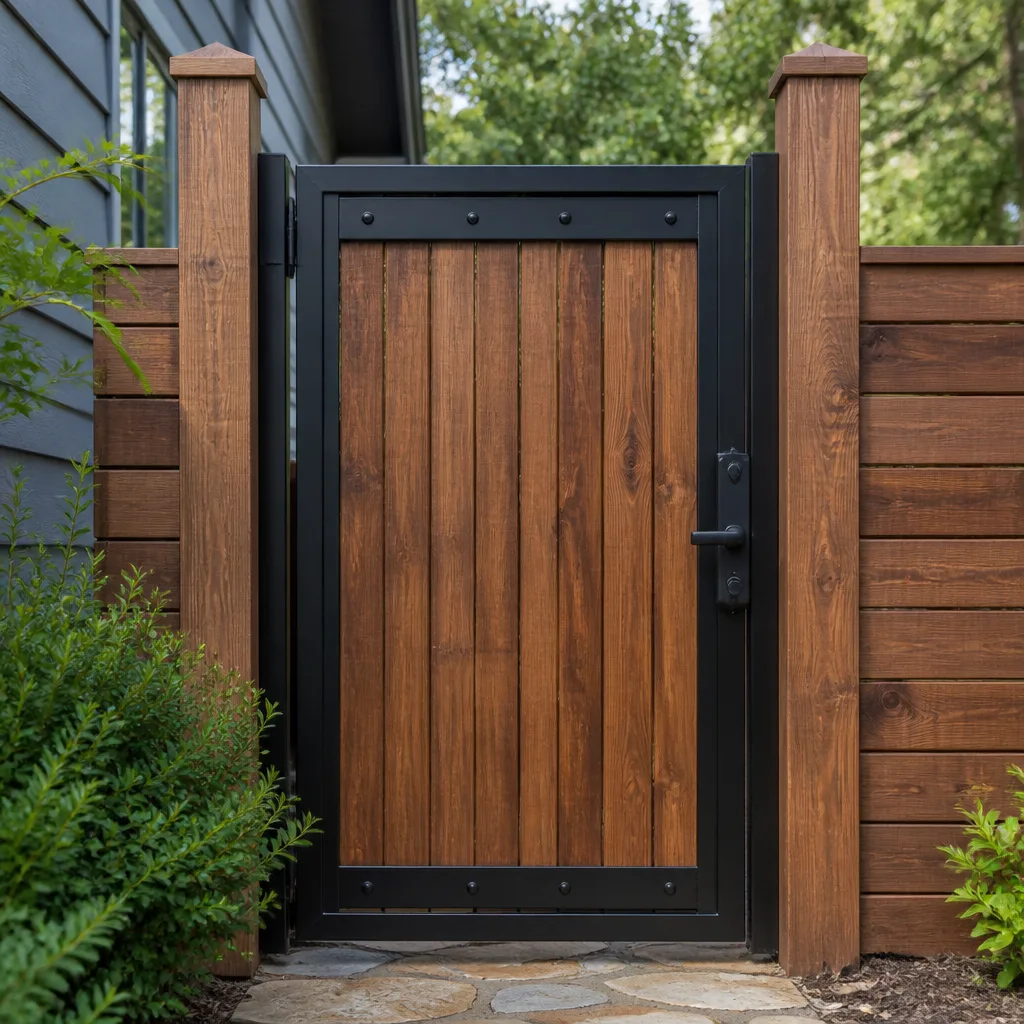 Wood & steel frame
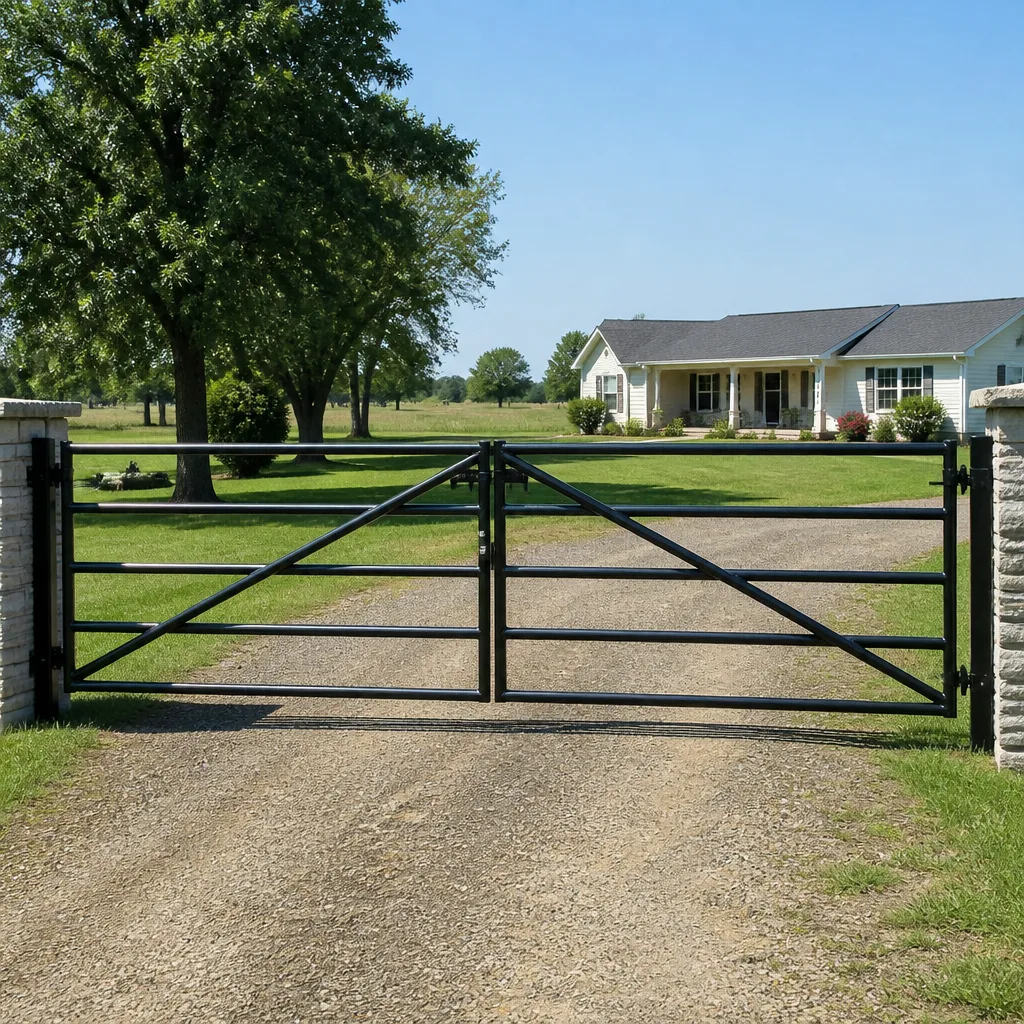 Farm & ranch
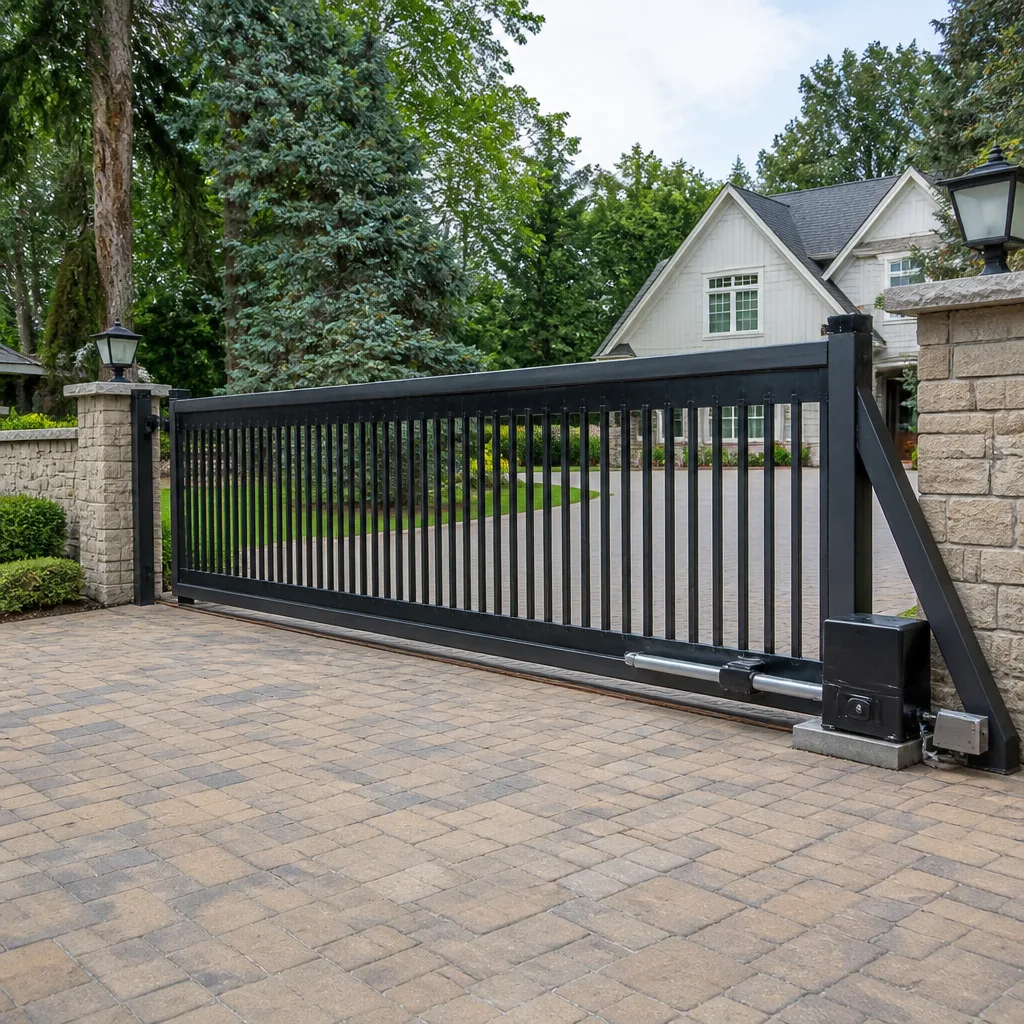 Sliding driveway gates
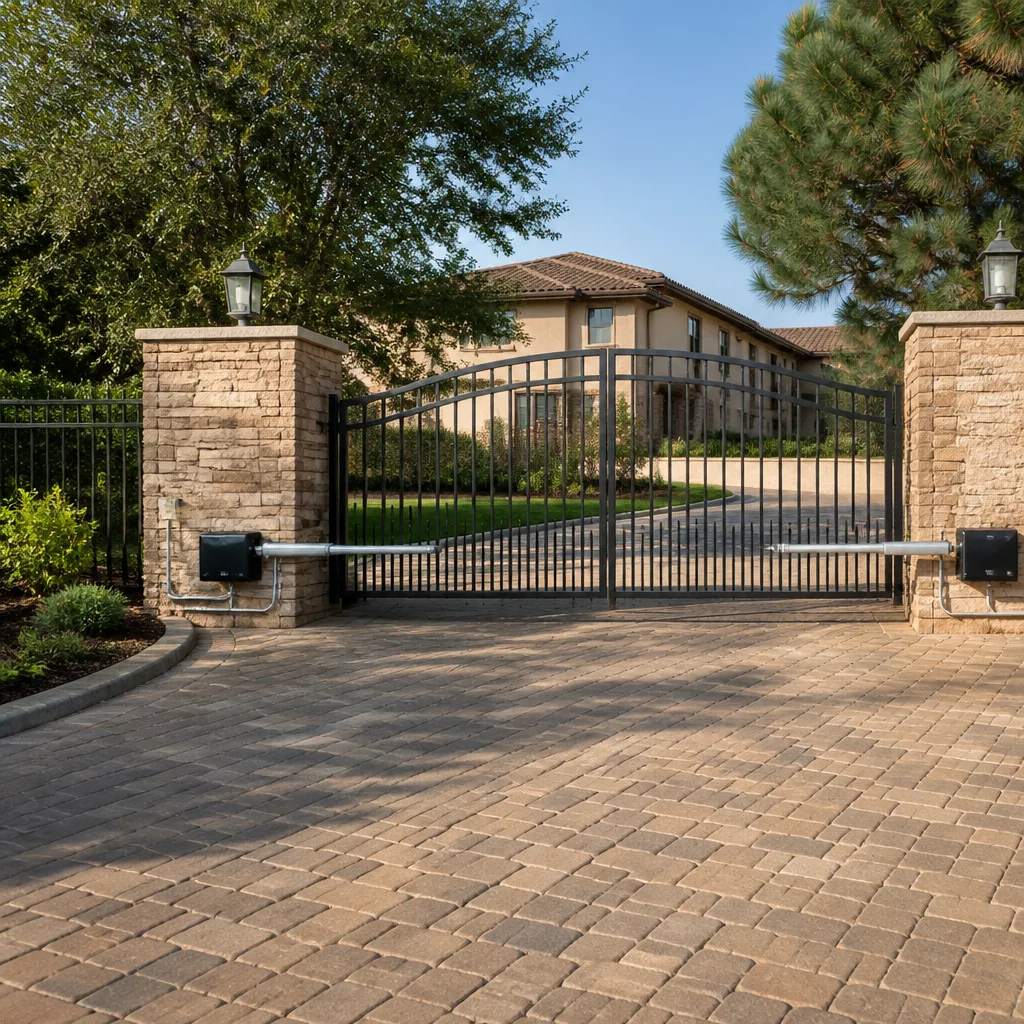 LiftMaster operators
Free on-site gate assessment - hinges, posts, and your LiftMaster or Nice gate operator checked before anything is quoted
The assessment is free and the quote is the invoice.
Get your free estimateThe Complete Guide to Gate Repair in Vacaville
The number one reason Vacaville homeowners call for a second gate repair within a year isn’t bad parts. It’s a first technician who treated the symptom and missed the system. A gate that “just needs a new battery” or “just needs the arm tightened” is usually telling you something else entirely: a control board seeing false signals, a loop buried in soil that’s drifted out of tune, or a motor working harder than it should because the hinges stopped doing their share. This guide maps the failure modes we see across Vacaville to their real root causes, so you can describe the problem precisely, ask better questions, and get it fixed right the first time.
Quick Answer
Gate repair in Vacaville addresses the actual root cause of a failure, not just the visible symptom. Most problems trace back to operator electronics, misaligned hinges and tracks, or safety devices reacting to heat, dust, and debris rather than to mechanical breakage. A proper diagnosis takes an on-site visit and results in a written estimate before any work begins. If you want gate repair done once and done right, insist on a technician who tests the whole system, not just the part that stopped moving.
Styles & brands we work with
- Wrought iron
- Wood & steel frame
- Farm & ranch
- Sliding driveway gates
- LiftMaster operators
Table of Contents
- Why Gates Fail in Vacaville: Symptoms vs. Root Causes
- How Vacaville Heat and Valley Dust Wear Out Gate Operators
- Repair vs. Adjustment: Why the Distinction Costs You Money
- Brand-Specific Failure Patterns in Vacaville Neighborhoods
- What a Complete Diagnosis Should Include
- Repair or Replace? Reading the Cumulative Failure Signal
- Residential vs. Commercial Gate Systems
- Step-by-Step: What Happens During a Gate Repair
Why Gates Fail in Vacaville: Symptoms vs. Root Causes
When a gate stops working, the symptom is the story the homeowner tells: “it won’t open,” “it opens halfway and reverses,” “the remote stopped working.” None of those is a cause. In our experience across Vacaville, the same four or five root causes sit behind most of those complaints, and fixing the symptom without touching the cause is how a gate ends up back in the shop twelve months later.
Take a gate that reverses halfway open. The owner assumes a bad motor. The technician who replaces the motor and leaves is out the door before the gate does the exact same thing. The actual cause is often a safety beam that’s out of alignment or a force setting that’s drifted out of range because the gate has been dragging on a worn hinge. The motor was never the problem.
- Operator electronics and control boards. Faulty logic, water intrusion, insect nests, or a board that’s been damaged by a power surge. Often shows up as random behavior, not a clean failure.
- Safety devices. Photo eyes, safety edges, and loop detectors. When these trip or drift, the gate behaves as if it’s protecting itself from an obstacle that isn’t there.
- Mechanical wear. Hinges, rollers, tracks, and guide wheels. The operator works harder and eventually the motor or board pays the price.
- Power and wiring. Loose connections, rodent damage, or a transformer that’s no longer delivering clean voltage.
- Accessories. Remotes, keypads, and receivers that have lost their pairing or are fighting interference.
Here’s the practical takeaway. A symptom tells you where the failure surfaced. A root cause tells you why. Vacaville property owners who learn to ask “what did you test, and what did you rule out?” get better repairs than the ones who ask “how much to fix it?” before anyone has looked at it.
How Vacaville Heat and Valley Dust Wear Out Gate Operators
Vacaville sits in a valley that heats up hard in summer and collects dust from surrounding open land. That combination does specific, predictable things to gate equipment, and it’s different from what happens to gates near the coast, where the air stays cooler and more humid year-round. Coastal gates tend to fail on corrosion. Vacaville gates tend to fail on heat, dust, and dry-season cycling.
Summer heat is the biggest factor. Control boards, motors, and transformers live inside an enclosure that sits in direct sun for much of the day. Electronics run hotter, and heat accelerates the aging of capacitors and solder joints on a board. A board that would last years in a cool garage can start behaving erratically after a few Vacaville summers. The heat also expands metal, which can throw off the clearances on a slide gate or stiffen a swing arm that was adjusted in cooler weather.
Valley dust is the second factor. Dust settles on tracks, rollers, and photo-eye lenses. On a slide gate, grit in the track adds friction the operator has to overcome on every cycle. On any automated gate, a dusty photo-eye lens that’s meant to detect obstacles can instead detect phantom ones, and the gate stops or reverses for no visible reason. Dust also works its way into limit switches and the mechanical guts of an operator.
- Slide gates: check the track for grit and the wheels for flat spots.
- Swing gates: check hinges and the operator arm for stiffness after hot weather.
- Photo eyes and safety edges: wipe lenses and confirm alignment when the gate behaves oddly.
- Enclosures: confirm the operator housing is sealed and shaded where possible.
None of this is a reason to panic. It’s a reason to expect certain failures on a schedule and to address them before they cascade. If your gate lives in full sun in Vacaville, treating your operator like equipment that runs in a hot environment, not like a garage-door opener that sits in the shade, will add years to its life.
Repair vs. Adjustment: Why the Distinction Costs You Money
An adjustment is a change to settings or alignment: tweaking a limit switch, realigning a photo eye, tightening a hinge, or re-pairing a remote. A repair replaces or restores a failed component: a control board, a motor, a safety edge, a receiver. Misclassifying the first as the second, or the second as the first, is one of the biggest reasons gate work gets billed wrong and comes back.
When an adjustment is treated as a repair, you pay for parts you didn’t need. A technician who swaps a board because the gate won’t respond, without first checking the photo-eye alignment and the remote pairing, has billed you for a component that never failed. When a repair is treated as an adjustment, the gate works for a while and then fails again, because the technician realigned the safety beam but never addressed the worn hinge that keeps knocking it out of alignment.
How to tell which you’re getting
- The technician should tell you, in plain language, whether the problem is a setting/alignment issue or a failed component.
- Ask how they confirmed it. “I re-paired the remote and the gate works” is an adjustment. “I tested the receiver and it’s not sending a signal” is a repair.
- Ask what would happen if the adjustment alone were done. If the gate would fail again within weeks, you’ve got a repair on your hands.
- Get the classification written into the estimate so you know exactly what you’re paying for.
In a hot, dusty climate, many problems start as an adjustment need and turn into a repair need if left alone. A loosening hinge isn’t a repair by itself. But if it lets the gate sag until the operator fights the sag for months, it becomes a motor or board repair. Catching it while it’s still an adjustment is the money-saving move.
Brand-Specific Failure Patterns in Vacaville Neighborhoods
We work on your brand, not one brand. That matters because each operator family has its own habits, and knowing them speeds up diagnosis considerably. Here’s what we see across the residential neighborhoods of Vacaville, from the established streets near downtown to the newer developments out toward the edges of town.
FAAC systems are common on residential swing gates. Their failure patterns tend to run toward limit-switch drift and control-board behavior after power events. When a FAAC gate starts stopping at the wrong angle or reversing early, the limit settings and board logic are the first places to look.
Viking operators show up on a range of gates and are generally reliable, but the photo-eye and safety circuit is where trouble tends to surface. A Viking gate that cycles erratically in summer heat often has a safety device or a connection issue, not a dead motor.
Linear operators, frequently installed on both slide and swing gates, are sensitive to mechanical drag. When the gate stops mid-cycle, a Linear operator may simply be doing its job: detecting excess force and stopping. The cause is often the gate itself, not the operator.
LiftMaster systems are widely installed on residential properties, and their accessories (remotes, keypads, receivers) are a frequent source of complaints that turn out to be pairing or interference rather than operator failure.
We also work with BFT, DoorKing, Elite, Ghost Controls, and Mighty Mule. The pattern across all of them is the same: learn how each brand behaves under heat and dust, and you stop guessing. A technician who services the full spectrum doesn’t need to push a replacement just because your brand isn’t one they stock.
What a Complete Diagnosis Should Include
A quick-fix visit looks at the part that stopped moving. A complete diagnosis looks at the whole system and gives you a written picture of what’s healthy and what isn’t. When a gate is failing in Vacaville, this is the checklist you should hold any technician to, and the one we work from ourselves.
- Observe the cycle. Watch the gate open and close fully, and note where it hesitates, reverses, or makes noise.
- Test the power supply and wiring. Confirm clean voltage at the operator and check connections for looseness or damage.
- Exercise the safety devices. Test photo eyes, safety edges, and loop detectors for correct response, not just a visual glance.
- Inspect the mechanical side. Check hinges, rollers, tracks, and guide wheels for wear, drag, and misalignment.
- Check the operator internals. Look for heat damage, water intrusion, insect activity, or damaged components on the control board.
- Verify accessories. Test remotes, keypads, and receivers, and check for interference or lost pairing.
- Test force and limit settings. Confirm they match the gate’s actual mechanical condition.
- Document findings and write the estimate. Explain what failed, what’s healthy, and what the repair will cost before any work starts.
That’s the difference between a repair and a repeat call. A technician who skips steps three, four, and six can “fix” the gate today and leave the real cause in place. If you’re already dealing with an automated system, the same diagnostic discipline applies to electric gate repair, since operator electronics are the usual suspect.
Repair or Replace? Reading the Cumulative Failure Signal
Our default is repair first. An operator that’s structurally sound and has a single failed component should be repaired, not replaced, and the brand-agnostic approach means we work with your existing equipment rather than pushing a new system. But there’s a point where cumulative failures tell you the operator is past economic repair, and it’s honest to say so.
The signal isn’t a single expensive repair. It’s a pattern: the board failed last year, the motor was replaced the year before, and now a component that shouldn’t be wearing out is wearing out. When a system is on its third or fourth significant repair in a short window, the math starts to favor replacement, and continuing to patch it is spending money on a system that’s already told you it’s done.
- Repair is the right call when there’s one clear failure, the rest of the system tests healthy, and the operator is in good physical condition.
- Repair is still right when the failure is in an accessory or safety device that can be replaced independently.
- Replacement deserves a conversation when failures are compounding, parts are hard to source, or the operator no longer matches the gate’s weight and use.
- Replacement is often the honest answer when the same component has failed repeatedly because the system was undersized for the gate from the start.
Because we handle both repair and installation under one roof, that conversation is straightforward. There’s no referral to a different company mid-project, and no pressure to replace something that’s still repairable. You get the diagnosis, the options, and the written estimate, and the decision stays yours.
Residential vs. Commercial Gate Systems
Residential and commercial gates fail in overlapping ways, but the stakes and the systems differ. A home driveway gate in Vacaville usually runs a swing or slide operator on a single-family property, sometimes DIY-installed with an entry-level operator. A commercial or multi-unit property runs access control: loop detectors, keypads, intercoms, and heavier operators that cycle far more often. Both benefit from the same root-cause approach, but the failure patterns differ.
On the residential side, the most common issues are heat-related board behavior, dusty photo eyes, and accessories losing pairing. Many homeowners work with entry-level systems like Mighty Mule or Ghost Controls that were installed to keep costs down, and those systems are serviceable when the diagnosis is done right.
On the commercial side, cycle count is the dominant factor. DoorKing and professional-grade LiftMaster systems in apartment complexes and business entries cycle dozens of times a day, and every mechanical wear point gets there faster. Loop detectors buried in the pavement can drift out of tune, and safety devices that protect pedestrians and vehicles get far more testing and adjustment. Commercial work also puts a premium on uptime, so diagnosing the root cause the first time matters even more.
Whether it’s a single-family driveway or a multi-unit access system, the same rule holds: the repair has to match the system, not just the part. A commercial operator treated like a residential one, with a quick visual check and a parts swap, will fail again quickly.
Step-by-Step: What Happens During a Gate Repair
Knowing the process removes the guesswork and the fear of surprise charges. Here’s how a proper gate repair should run, from your first call to the final test.
- You call and describe the symptom. “Won’t open,” “reverses halfway,” “remote stopped working.” That’s enough to start.
- We schedule a visit. We answer 24/7. Fast dispatch from 7am to 7pm, Sunday through Friday, closed Saturday.
- On-site diagnosis. We run the full checklist: power, safety devices, mechanical condition, operator internals, accessories, and force/limit settings.
- We explain the root cause and the options. You hear what failed, what’s healthy, and whether this is a repair or an adjustment.
- We write the estimate. The price is quoted and agreed before any work starts, and that written estimate sets the final price.
- We complete the repair. Components are replaced or settings corrected, and existing equipment is retained wherever it’s serviceable.
- We test the whole system. The gate cycles normally, the safety devices respond correctly, and the remote and keypad work.
- We walk you through what we did. You know what was fixed, what to watch for, and when the next wear point may need attention.
That last step matters in Vacaville’s climate. Knowing which components are due for attention can keep a small adjustment from turning into a big repair. It’s also the point where the difference between a gate specialist and a generalist shows: a specialist can tell you what your specific operator is likely to need next.
Common Mistakes to Avoid
- Choosing a generalist for a branded operator. A handyman who’s never worked on your FAAC or Viking system will guess, and guessing is expensive. Ask what brands the technician services before you book.
- Accepting a parts swap without a diagnosis. If a board or motor is being replaced without testing power, safety devices, and mechanical drag first, the real cause may still be in place.
- Ignoring a dusty photo eye or a stiff hinge. In Vacaville’s dry, dusty summers, these small adjustments prevent larger repairs. Left alone, they turn into motor or board failures.
- Treating a symptom as the whole problem. “The gate reverses” is not “replace the motor.” It’s a question waiting for an answer. A technician who doesn’t test before quoting is skipping the important part.
- Calling for a repair when it’s really an adjustment. If the gate needs realignment or re-pairing, paying for parts you don’t need is the wrong outcome. Insist on knowing which one you’re getting.
- Patching a system that’s told you it’s done. When failures compound, repairing a fourth time isn’t thrift. It’s spending on a system that’s already proven it won’t hold.
- Paying more than the estimate. The price should be quoted and agreed before any work starts, and the written estimate should set the final price. Ask for it in writing.
See the difference
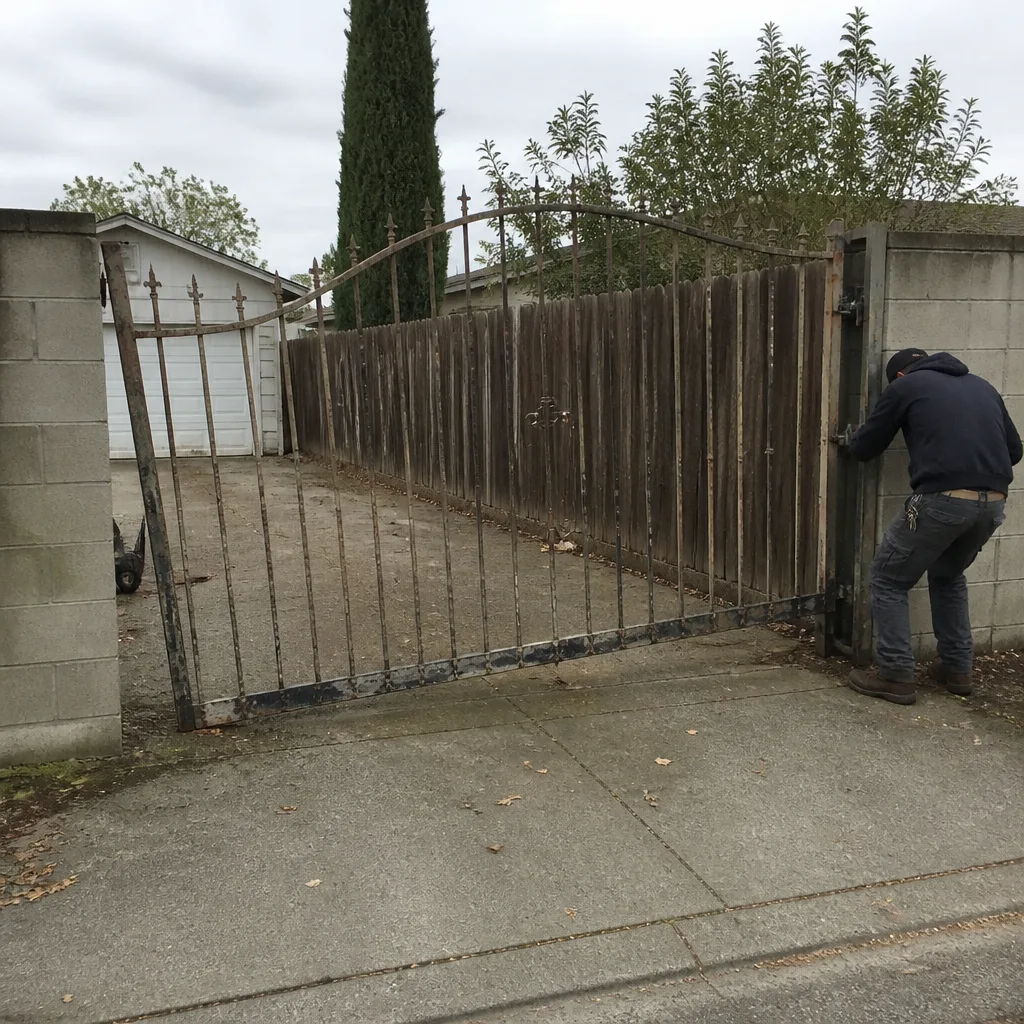 Before
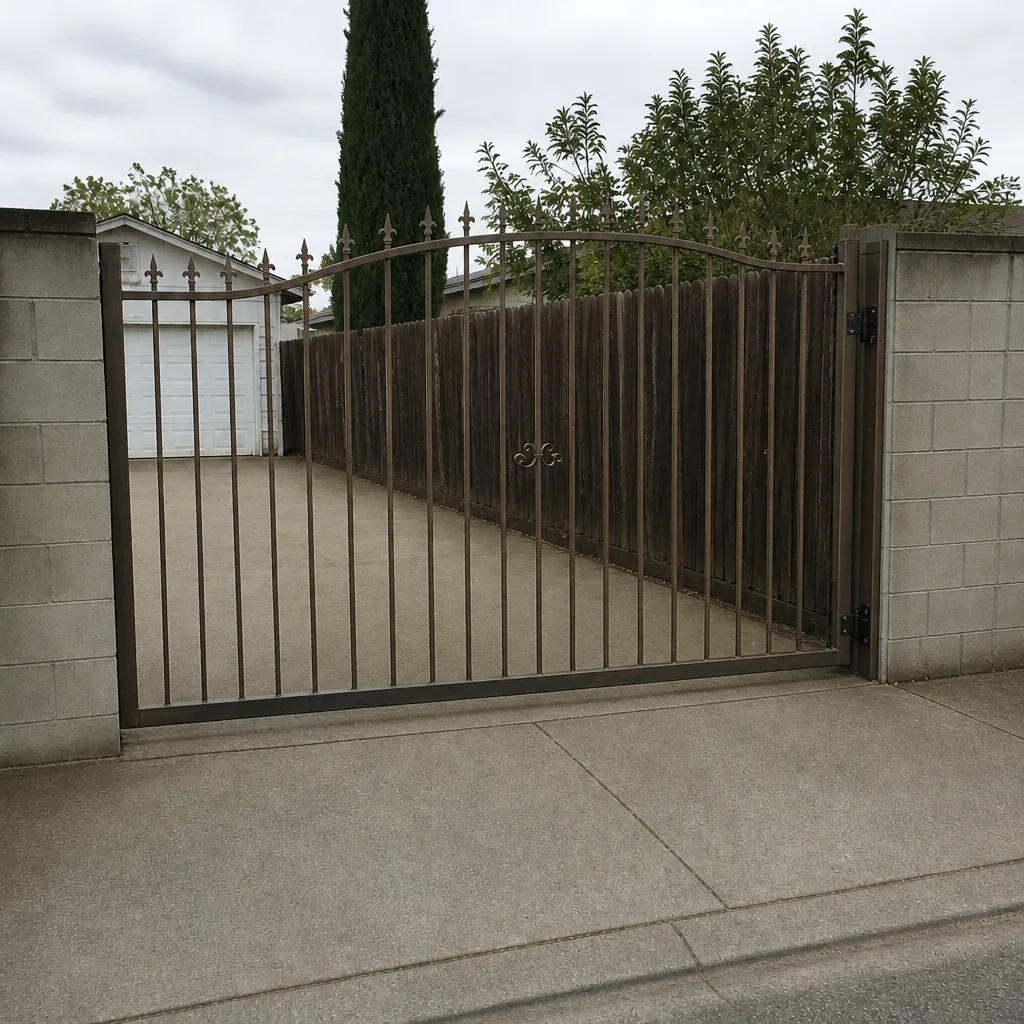 After
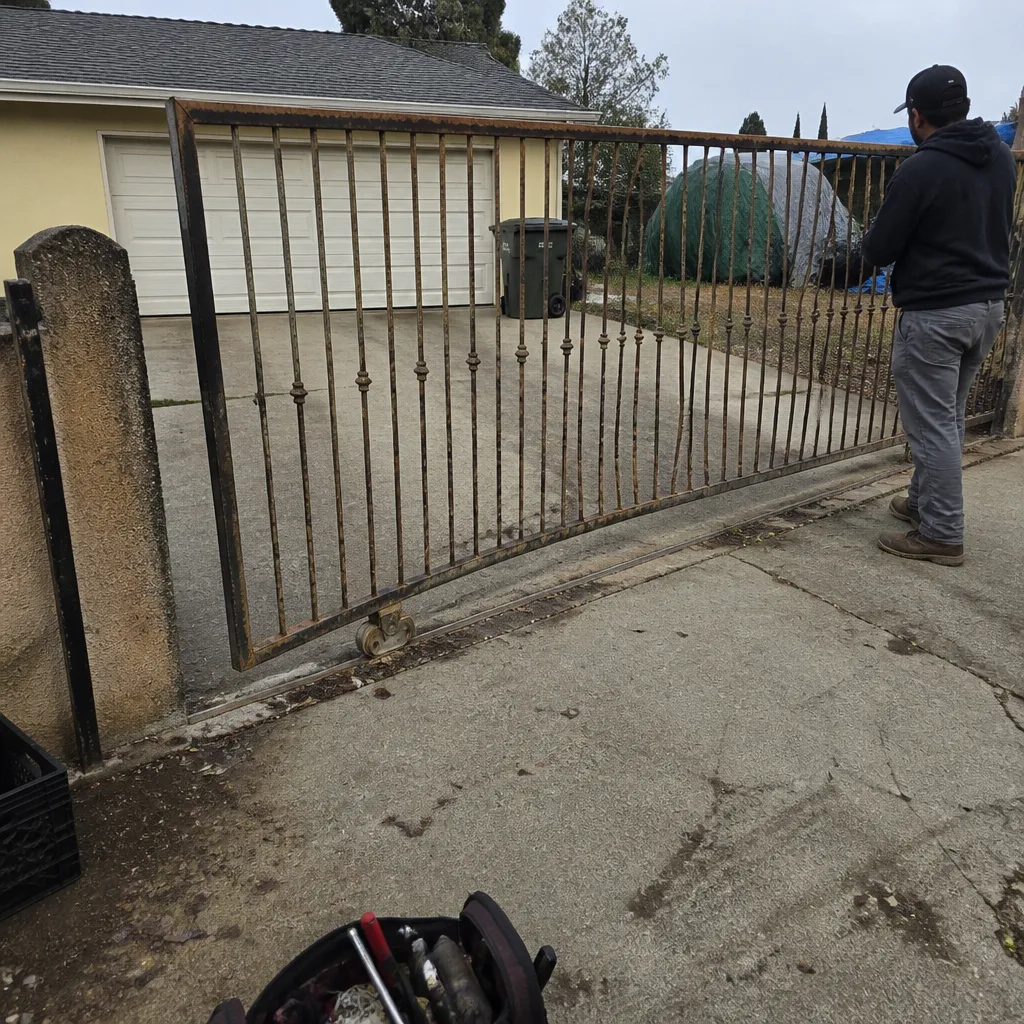 Before
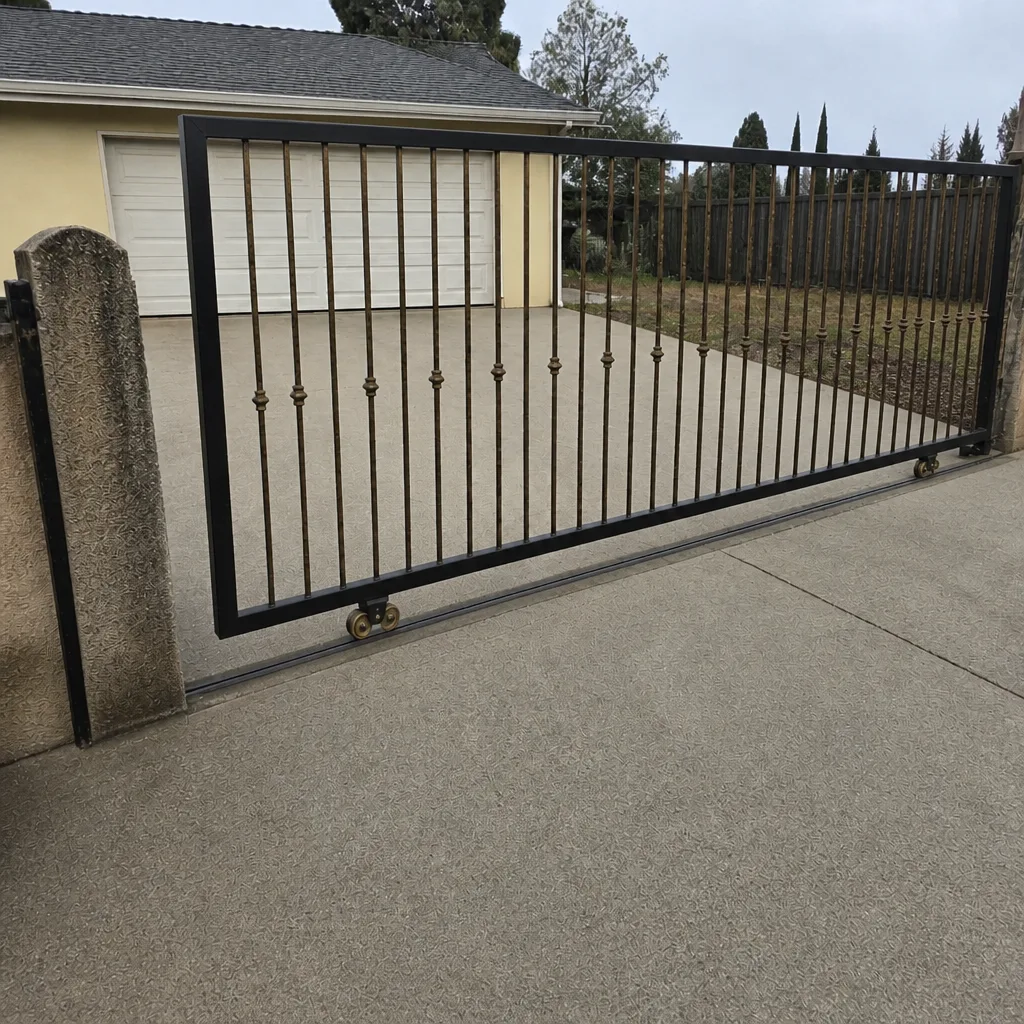 After
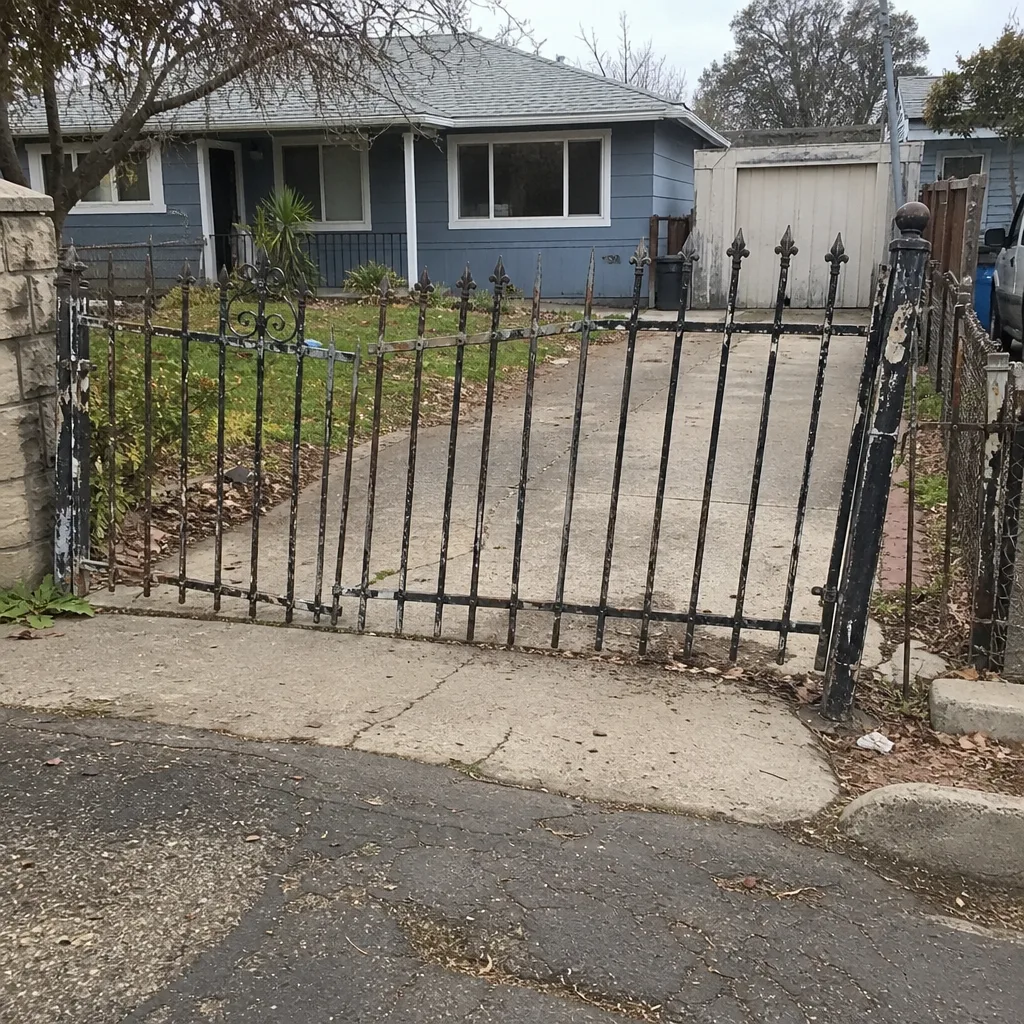 Before
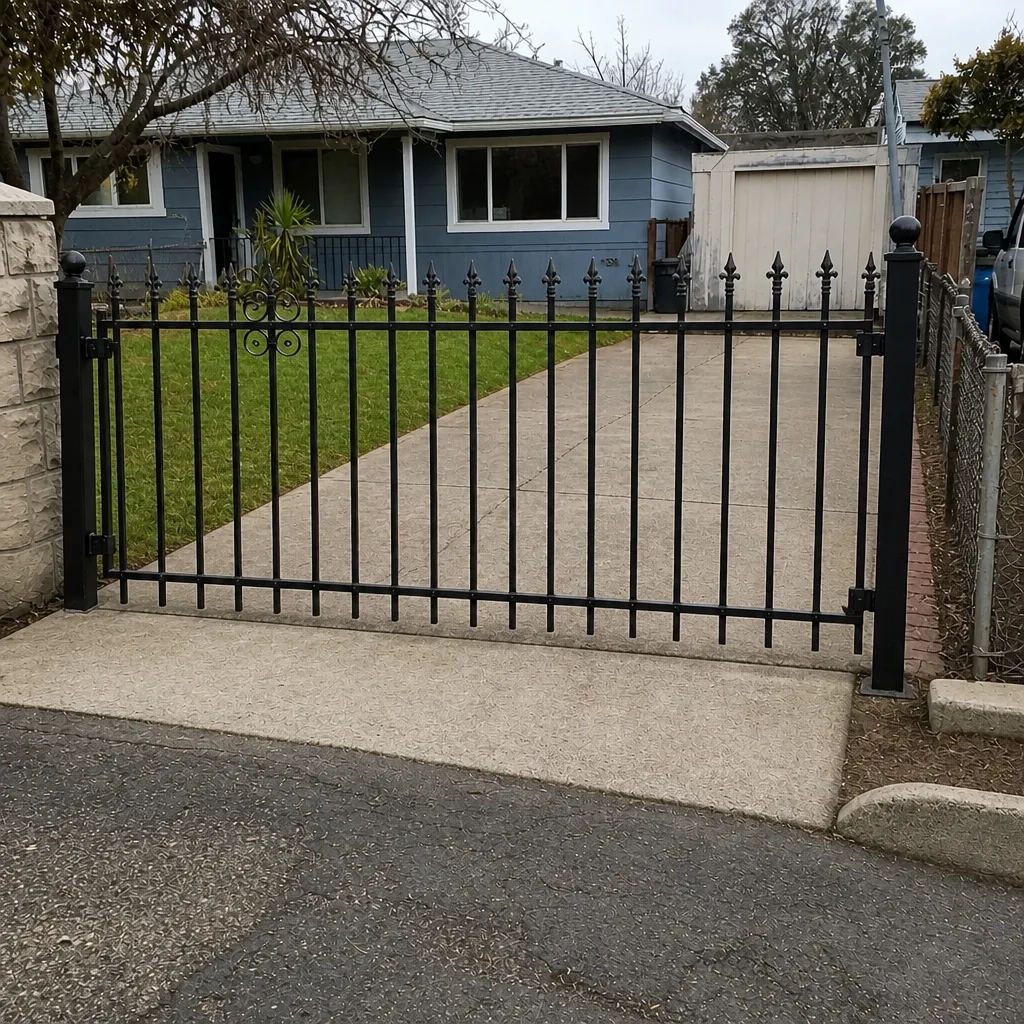 After
When to Call a Professional
Some gate problems are safe to observe and describe. Others call for a trained technician, and we’d rather you call than improvise. Call us when a gate won’t open at all, when it reverses or stops partway through a cycle, when a safety device is testing inconsistently, when the operator is making a new noise or running hot, or when the gate has been cycling with increasing struggle across several weeks. Call too when a control board looks damaged or a wiring connection looks suspect; operator power and heavy gate panels are genuinely dangerous, and the right move is not to open up an operator or lift a heavy panel yourself. We’re Gate Repair Vacaville, and we offer free estimates in Vacaville. Call (888) 772-3933. We answer 24/7. Fast dispatch from 7am to 7pm, Sunday through Friday.
Frequently Asked Questions
An adjustment changes settings or alignment, while a repair restores or replaces a failed component. The way to tell is to test the whole system, not just the part that stopped moving. Ask the technician to tell you which one it is and how they confirmed it, and get it written into the estimate. Call (888) 772-3933 for an exact quote; estimates are free.
The cost depends on the root cause, the operator, and whether parts are needed. Pricing is set per job by a written estimate after an on-site diagnosis, so you know the price before any work starts. We don’t quote over the phone without seeing the system. Call (888) 772-3933 for an exact quote; estimates are free.
In Vacaville, the most common cause is a safety device or force setting reacting to heat and dust rather than a failed motor. Photo eyes that are dusty or drifted out of alignment, and hinges that stiffen as the gate drags, both trigger a reversal. The fix is usually an adjustment, not a replacement. Call (888) 772-3933 for an exact quote; estimates are free.
We work on your brand, including LiftMaster, FAAC, BFT, Linear, Viking, Ghost Controls, DoorKing, Elite, and Mighty Mule. That covers entry-level residential systems through professional-grade commercial access control. We keep your existing operator where it’s serviceable rather than pushing a brand change. Call (888) 772-3933 for an exact quote; estimates are free.
A dusty photo eye or a stiff hinge usually produces inconsistent behavior: the gate works, then doesn’t, then works again. A failed board or motor tends to produce repeated or total failure. A full diagnosis tells the difference. Call (888) 772-3933 for an exact quote; estimates are free.
Replacement deserves a conversation when failures are compounding, the same component keeps failing, or the operator no longer matches the gate’s weight and use. A single clear failure in an otherwise healthy system is usually a repair. The written estimate should lay out the options. Call (888) 772-3933 for an exact quote; estimates are free.
The Bottom Line
Gate failures in Vacaville usually trace back to a handful of root causes: operator electronics, safety devices, mechanical wear, power and wiring, and accessories. The symptom is just where the failure surfaced. Fix the symptom and you buy a repeat service call; find the cause and the gate stays fixed. Vacaville’s heat and valley dust speed up wear on boards, hinge stiffness, and photo-eye alignment, so expect certain issues on a schedule and address them early. Insist on a full diagnosis and a written estimate, know whether you’re getting a repair or an adjustment, and call a gate specialist who works with your brand. Our technicians have up to 10 years of experience, and we’re ready when you are. Call (888) 772-3933 for a free estimate. We answer 24/7. Fast dispatch from 7am to 7pm, Sunday through Friday.
Written by the team at Gate Repair Vacaville.