
Last updated November 15, 2026
 Wrought iron
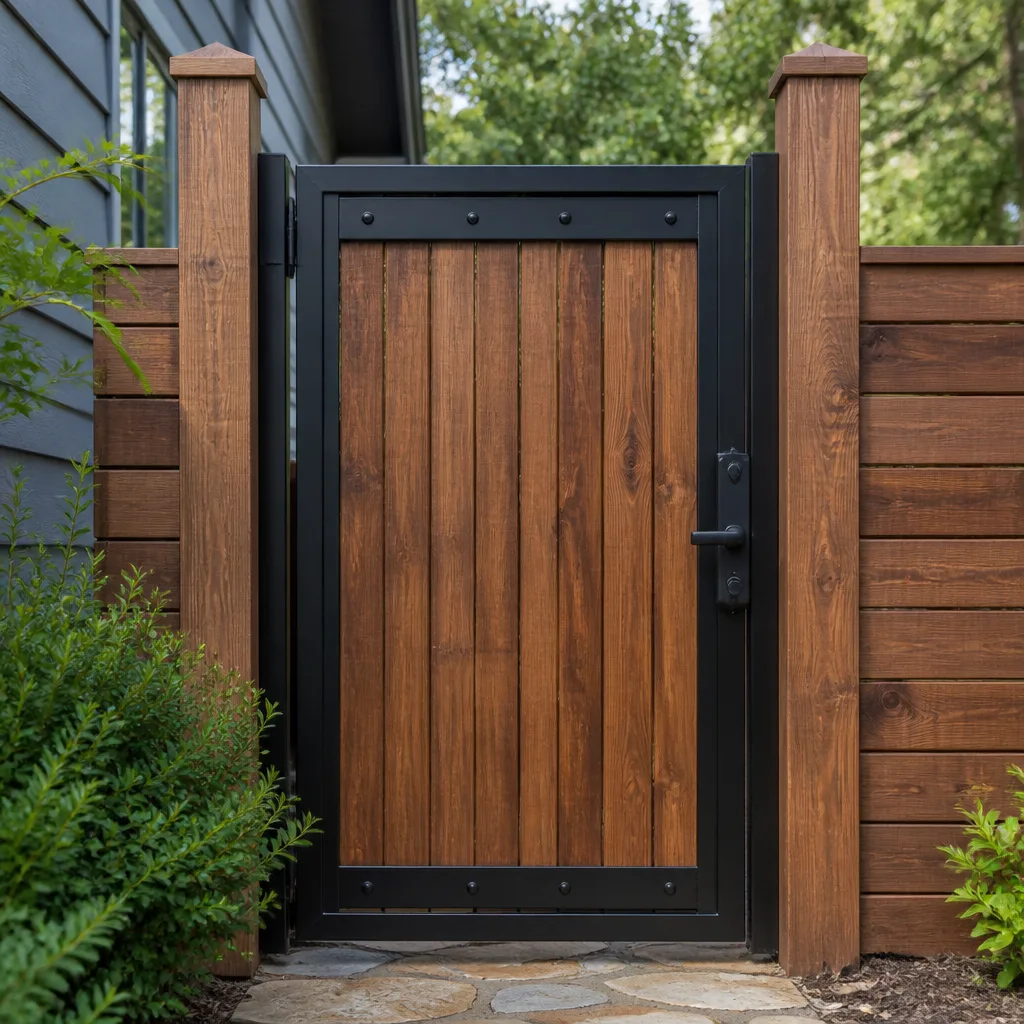 Wood & steel frame
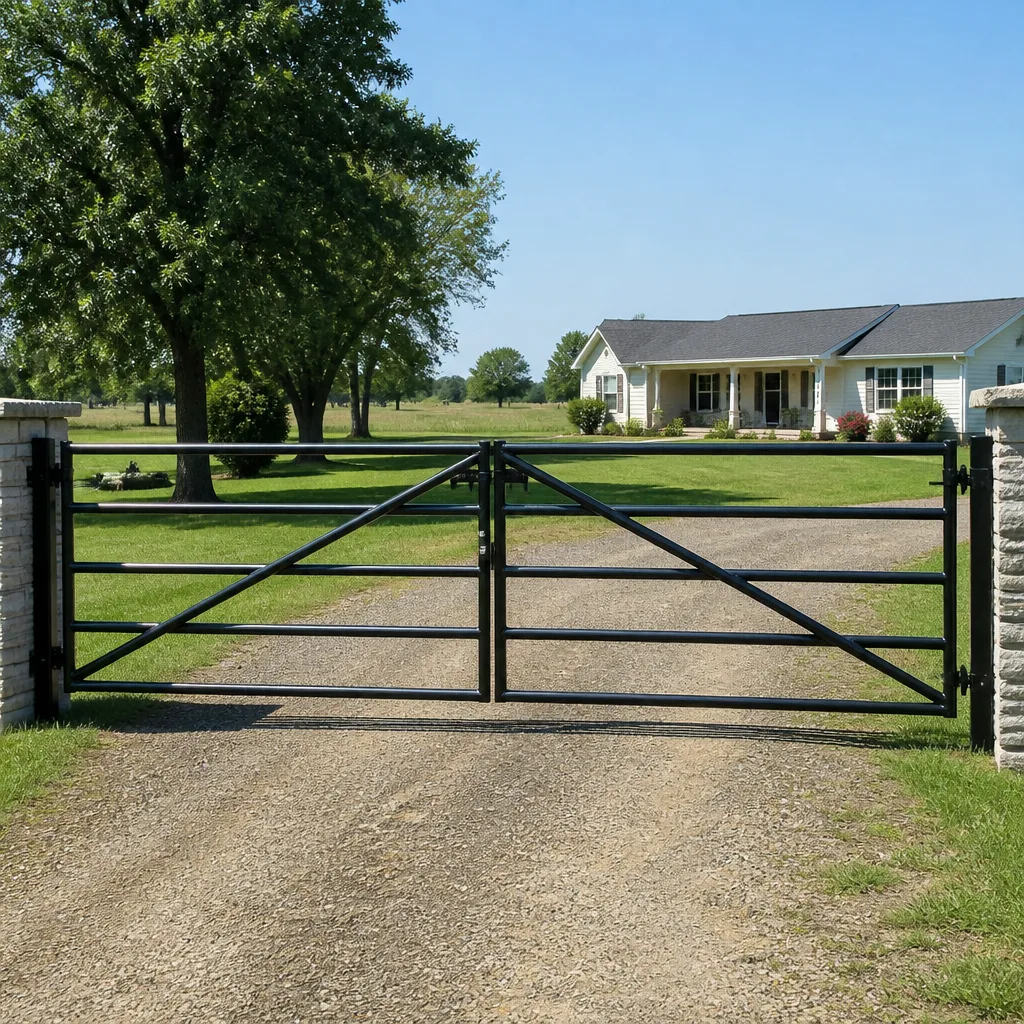 Farm & ranch
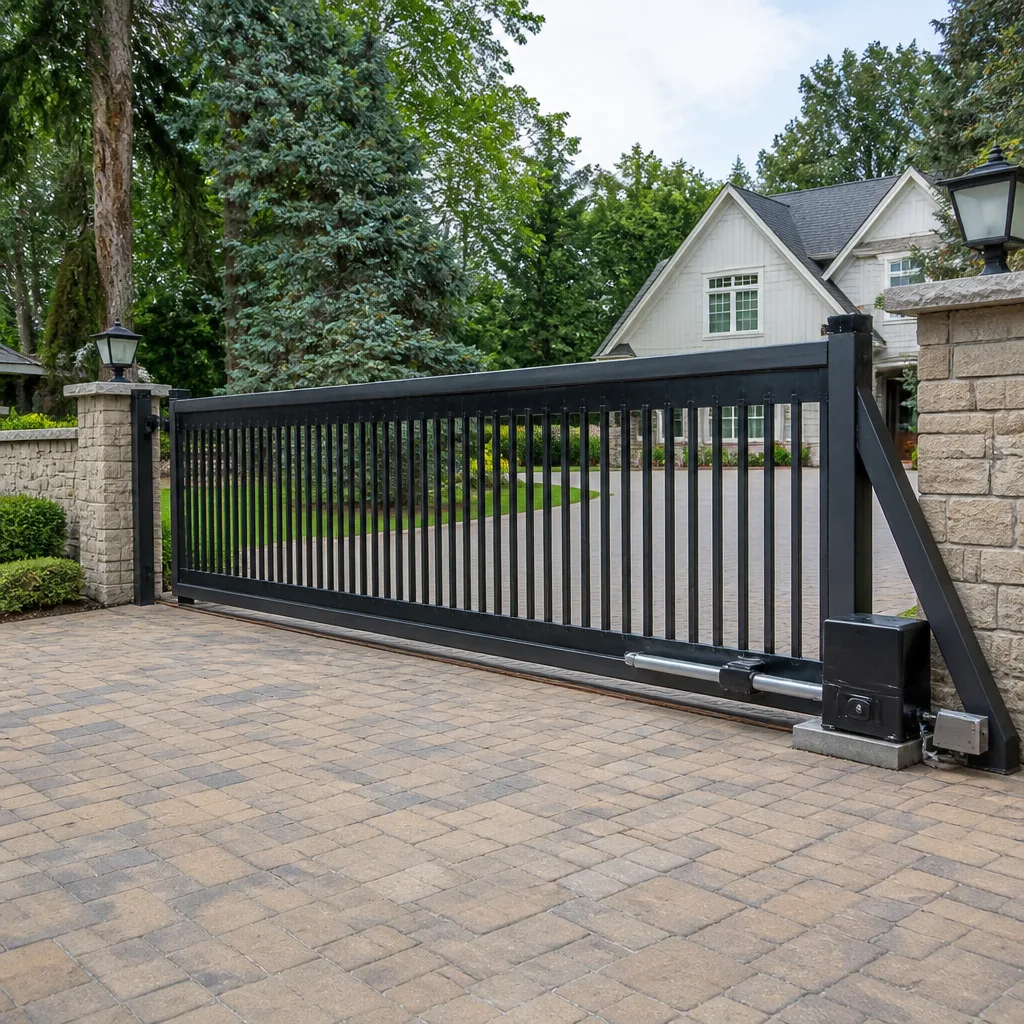 Sliding driveway gates
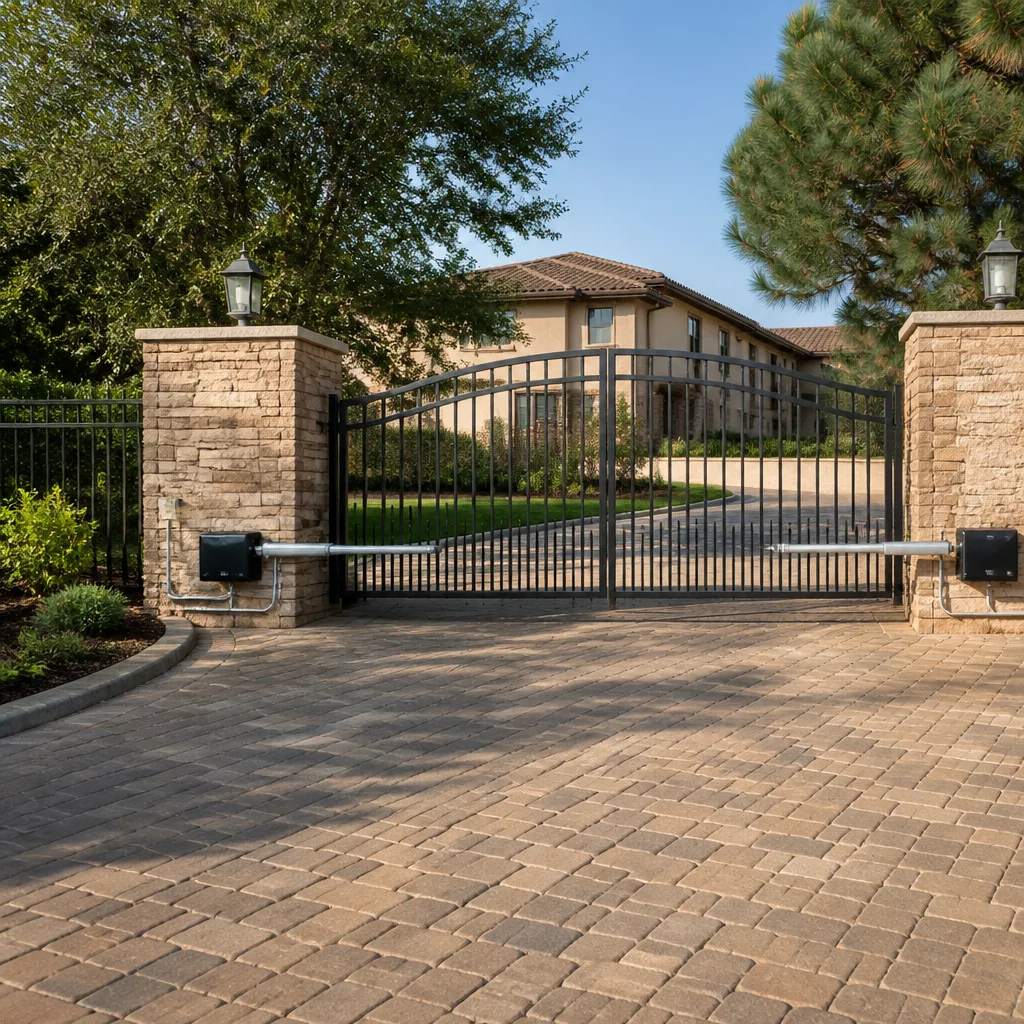 LiftMaster operators
Free on-site gate assessment - hinges, posts, and your LiftMaster or Nice gate operator checked before anything is quoted
The assessment is free and the quote is the invoice.
Get your free estimateDIY vs Professional Gate Repair: The Vacaville Homeowner’s Decision Guide
The most common misconception about gate repair is that it’s all one skill level. It isn’t. Fixing a sagging hinge and reprogramming a LiftMaster control board sit at opposite ends of a line most homeowners can’t see until they’ve already crossed it. Adjusting a gate’s travel limits on the wrong operator without a wiring diagram doesn’t just risk a failed repair – it can disable the entrapment protection that makes the gate legally safe to operate. This guide draws that line clearly, task by task, so you can decide what’s genuinely safe to handle yourself and what needs a technician in Vacaville.
Styles & brands we work with
- Wrought iron
- Wood & steel frame
- Farm & ranch
- Sliding driveway gates
- LiftMaster operators
Quick Answer
Lubrication, minor bolt tightening, cleaning photo-eyes, and reading operator error codes are genuinely safe for most homeowners to do themselves. Anything involving the operator’s low-voltage wiring, control board, limit switch programming, or loop detector sensitivity is professional work – not because it’s beyond your mechanical ability, but because a mistake there disables the entrapment protection that keeps people from being crushed, and that carries real liability. When in doubt, the rule is simple: mechanical adjustments you can see and feel are fair game; programming and electrical are not.
Table of Contents
- Where the Real Line Sits: Mechanical vs Electrical
- Tasks That Are Genuinely Safe to Do Yourself
- Tasks That Look Simple but Require Brand-Specific Knowledge
- The California Legal Context: Who’s Liable When a DIY Gate Injures Someone
- How to Use Operator Error Codes as a Diagnostic Tool
- When a Quick Fix Makes the Professional Repair More Expensive
- How to Choose a Gate Technician in Vacaville
- Common Mistakes to Avoid
- When to Call a Professional
- Frequently Asked Questions
Where the Real Line Sits: Mechanical vs Electrical
The DIY-versus-professional question for gates isn’t really about how handy you are. It’s about which side of a technical and legal boundary a given task falls on. A gate system has two halves, and they behave very differently.
The mechanical half is the gate panel itself and the hardware that moves it – hinges, rollers, tracks, latches, and the physical arm or chain that connects the operator to the gate. These are visible, tactile parts. You can see when a hinge is loose, hear when a roller is grinding, and feel when a latch is sticking. Adjustments there are within reach for a careful homeowner.
The electrical half is everything inside the operator housing: the control board, the motor wiring, the limit switches that tell the gate when to stop, the safety sensors, and the loop detector that senses a vehicle. This is low-voltage work, but low voltage does not mean low consequence. The entrapment protection built into a modern operator – the photo-eye sensors and the obstruction sensing that reverses the gate before it squeezes someone – lives in this electrical half. Reprogram it wrong and the gate still opens and closes, which is exactly what makes the mistake so dangerous. It looks like it’s working.
In our experience, the homeowners who get into trouble are rarely overconfident about the mechanical side. They’re overconfident about the electrical side because it looks like a settings menu on a piece of equipment. It isn’t. It’s safety equipment, and it deserves the same respect you’d give a breaker panel. For anything on that electrical side, electric gate repair is the right call, and it’s the work we handle most often.
Tasks That Are Genuinely Safe to Do Yourself
We’re not going to hedge here. There is a real list of gate maintenance tasks a homeowner can and should do, and doing them extends the life of the system and cuts down on service calls. These are the tasks where you can’t realistically cause an entrapment hazard or damage an operator by attempting them.
- Lubricate hinges, rollers, and the track. A dry hinge wears fast. A few drops of a proper lubricant on the pivot points and a wipe-down of the track keep the gate moving smoothly and reduce strain on the operator motor. This is the single most important thing you can do yourself, and most people skip it.
- Tighten loose hinge and bracket bolts. A gate that sags at the hinge is often just working itself loose over time. If you can reach the bolt with a wrench and see the bracket it holds, snugging it down is fair game. Stop if a bolt spins freely in stripped threads, since that’s a hardware problem, not a tightening problem.
- Clean the photo-eye sensors. The safety sensors that guard the gate’s path get dusty, cobwebbed, or splashed with mud. A soft cloth and a little water restore them. Dirty sensors are one of the most common reasons a gate refuses to close, and cleaning them costs nothing.
- Clear debris from the track and gate path. Fallen leaves, twigs, and dirt in a sliding gate’s track cause binding that the operator reads as an obstruction. Sweeping the channel clean is simple and prevents a lot of false faults.
- Check and replace remote batteries. Before you assume the operator is failing, a fresh battery in the remote rules out the simplest cause.
- Read your operator’s error codes. This is a diagnostic task, not a repair, and it’s covered in its own section below. Knowing the code before you call saves time.
Notice what’s not on this list: anything that requires opening the operator housing, moving a limit switch, or adjusting a sensor’s sensitivity. Those carry a real risk and belong to a technician. But the tasks above are yours, and we’d rather you do them than let a good gate wear out from neglect. A gate repair visit is often preventable with ten minutes of lubrication and cleaning a few times a year.
Tasks That Look Simple but Require Brand-Specific Knowledge
This is where the line gets blurred, and where we see the most self-inflicted damage. The tasks below all present as minor adjustments. They aren’t, because every operator brand handles them differently, and a procedure that’s correct for one system is wrong – sometimes damaging – for another.
Limit switch adjustment. The limit switches tell the gate where to stop at each end of its travel. Get the adjustment wrong and the gate either stops short, slams into the end stop, or reverses unpredictably. On a Mighty Mule, the limit setup uses a different method than on a LiftMaster, and the adjustment range on a commercial FAAC operator is different again. There’s no universal procedure. Without the brand’s own documentation, you’re guessing, and guessing on limits is how gates get damaged and motors burn out.
Loop detector sensitivity tuning. A driveway loop detects a vehicle and holds the gate open. When it’s mis-tuned, the gate either fails to see a car (and closes on it) or sees phantom vehicles and never closes at all. Sensitivity isn’t a single dial; it depends on the loop’s size, the operator brand, and what’s nearby. Getting this wrong is a safety problem, not a convenience one.
Operator programming. Modern operators store travel limits, force settings, delay times, and safety behavior in their control boards. These settings interlock. Change one without understanding how it affects the others and you can quietly disable the reverse-on-obstruction feature. That’s the exact scenario the opening of this guide warned about: a gate that opens and closes fine but is no longer safe.
Our technicians have up to 10 years of experience, and much of that is spent on precisely these adjustments across the brands we work with – Elite, Mighty Mule, LiftMaster, and FAAC among them. The reason brand familiarity matters here isn’t marketing. It’s that a technician who knows your operator’s specific programming logic doesn’t have to experiment on your gate.
The California Legal Context: Who’s Liable When a DIY Gate Injures Someone
This section is uncomfortable, and it’s the one most guides skip. In California, if a gate you modified yourself injures someone – a family member, a visitor, a delivery driver, a child who wanders into the path – the liability question doesn’t land where most homeowners assume it does.
Automatic gates are treated as a safety-sensitive system, and entrapment protection is the reason. When a gate lacks working entrapment protection and injures someone, the person who last modified the system is often the one in the liability chain. If that person is you, the homeowner, your homeowner’s insurance is the policy that gets tested. Whether a claim is covered can depend on whether the modification was done properly and whether the gate was maintained – and an insurer may look hard at a DIY electrical modification when deciding how to handle a claim.
We’re not attorneys and we won’t pretend to give legal advice. But the practical takeaway is plain: the moment you open the operator housing and change a safety setting, you’ve taken on a responsibility that a licensed technician normally carries. That’s a real reason to leave electrical work to a professional, separate from the question of whether you can physically do it.
There’s also a permit side. Most cities require a permit for major gate and operator installations and sometimes for significant modifications, so before you install a new operator or make structural changes to a gate, ask the City of Vacaville’s building department what applies to your project. A five-minute phone call to the city beats discovering a permit problem later. For a new system, working with a specialist from the start keeps the project on the right side of both the code and the insurance question.
How to Use Operator Error Codes as a Diagnostic Tool
Here’s a DIY win most homeowners don’t know about. Your operator’s error codes are free diagnostic information, and gathering it before you call a technician is genuinely useful. It doesn’t risk anything – you’re reading a display or counting flashes, not changing settings – and it shortens the diagnosis.
Different brands present codes differently. Some operators have a digital display that shows a fault code. Others, including many LiftMaster and Mighty Mule units, flash an LED a set number of times, and the count tells you the fault category – an obstruction event, a limit fault, a sensor problem, a motor issue. Your owner’s manual maps the flashes to the meaning. That manual is the one piece of documentation you should keep.
When you call for service, the conversation goes faster and the technician arrives already oriented if you can tell them three things:
- The operator brand and, if you can find it, the model on the label inside the housing.
- The exact error code or flash count you observed.
- What the gate was doing when it faulted – refusing to open, refusing to close, reversing partway, stopping mid-travel, or clicking without moving.
That information helps a technician arrive prepared with the right parts and the right brand knowledge, rather than spending the first part of the visit gathering basics. In our experience, a homeowner who calls with the brand, the code, and the behavior gets a faster, more accurate repair than one who calls with only “it stopped working.” This is the ideal way to gather information yourself while leaving the actual repair to a professional, and it’s how we’d suggest approaching any Gate Repair Vacaville service call.
When a Quick Fix Makes the Professional Repair More Expensive
We want to be honest about the pattern we see, because it’s the strongest argument in this whole guide for knowing where the line is. A failed DIY attempt usually doesn’t just fail. It changes the state of the system in a way that makes the eventual professional repair take longer and cost more.
Three scenarios come up again and again.
Reprogramming that overwrites the original settings. A homeowner adjusts force or travel limits to stop a gate from reversing, and in doing so overwrites the factory-safe settings and erases the original benchmark. When the technician arrives, the operator is no longer in a known state. Diagnosing a problem is far easier from a known-good baseline than from a scrambled one; restoring that baseline becomes part of the bill.
Forced travel that damages the operator. When a gate binds and won’t move, forcing it – by hand or by increasing the motor’s force setting – can strip a gear, burn a motor, or crack a limit switch. A binding gate is usually a mechanical problem in the panel or track that should be relieved, not overpowered. Forcing it turns a mechanical fix into a motor replacement.
Replacing parts by guesswork. Buying a new control board or sensor because the gate “seems like it needs one” often means the wrong part, a part that isn’t the actual fault, and a return that doesn’t fit the original problem. The original fault is still there when the technician arrives, now with a mismatched part in the mix.
The pattern is the same each time: the DIY attempt doesn’t solve the problem, and it adds a second problem on top of the first. That’s why we lean toward the “repair first” approach – understand the actual fault before touching anything. A free estimate and a written price from a specialist is often cheaper than the DIY detour, and it definitely saves the frustration.
How to Choose a Gate Technician in Vacaville
If you’ve decided the task is beyond the safe DIY line, the next decision is who does the work. In Vacaville, as in most of Solano County, you’ll find a wide range of people willing to work on a gate – general handymen, fencing crews, and gate specialists. They are not interchangeable, and the difference shows up when your operator is a specific brand with specific logic.
Here’s what to look for:
- Brand familiarity, stated specifically. A technician who can name the operator brands they work on – and who knows the difference between programming a LiftMaster and a FAAC – is a specialist. One who says “we work on all gates” is telling you they’ll figure it out on your driveway.
- Comfort with the electrical side. Many general repair shops turn away operator control boards, loop detectors, and sensor wiring. Ask directly whether they service the operator itself or only the gate panel.
- A repair-first approach. A specialist diagnoses your existing operator rather than pushing a replacement. If the first recommendation is a new system before anyone has opened the housing, get a second opinion.
- Residential and commercial experience. A technician fluent in commercial access control has seen failure modes a residential-only tech hasn’t. That breadth translates to faster diagnosis on your driveway gate.
- Licensed and insured status. Ask. It matters for the liability conversation above.
We’re a gate specialist, not a general contractor who fixes gates on the side, and that focus is the reason we can say we work on the full spectrum – from a Mighty Mule DIY install to a DoorKing commercial access system. That’s the breadth we’d want a technician to bring to our own gate. You can see the full scope of what a Vacaville gate specialist handles, and it’s the standard we’d suggest you hold anyone to.
Common Mistakes to Avoid
- Opening the operator housing to “take a look.” The control board is safety equipment, not a curiosity. Once the cover’s off and settings are touched, you’ve crossed into professional territory, and a technician now has to re-establish a safe baseline before diagnosing anything. Leave the cover on.
- Increasing the force setting to stop a gate from reversing. This is the single most dangerous DIY gate mistake we see. A gate that reverses on obstruction is doing its job; raising the force disables that protection. The reversal is a symptom, and the symptom is there for a reason.
- Forcing a binding gate by hand. When a gate won’t move, the binding is usually in the track, roller, or hinge – fixable mechanical causes. Forcing the panel or the motor strips gears and cracks limit switches, turning a simple fix into a motor replacement.
- Assuming a dirty sensor means a faulty one. The most common “my gate won’t close” call is a dusty or misaligned photo-eye, not a dead sensor. Clean it and check its alignment before you buy a replacement – replacing a working sensor solves nothing.
- Buying a control board on a guess. A control board is expensive and often not the fault. Without the error code and a proper diagnosis, a guessed board is money spent on the wrong part while the real fault sits untouched.
- Programming a new operator without checking the permit side. Before installing or significantly modifying an operator, confirm with the City of Vacaville’s building department what a permit requires for your project. A permit question after the work is done is a problem you don’t want.
- Ignoring a slow-moving gate. A gate that’s gradually getting sluggish or noisy is signaling worn hardware or a strained motor. Waiting until it fails completely means a bigger repair. Address the noise early with lubrication and a check.
When to Call a Professional
Call a professional the moment the problem moves from something you can see and feel to something involving the operator’s electrical side. Specific triggers: the gate won’t open or close and the error code points to a limit, motor, or sensor fault; the gate reverses unpredictably or fails to reverse on obstruction; the operator clicks but doesn’t move; the loop detector misbehaves; the remote and keypad have stopped working and a battery change didn’t fix it; or the gate has been hit or has jumped its track. Any of those means the safe DIY line has been crossed.
Gate Repair Vacaville offers free estimates in Vacaville – call (888) 772-3933. We answer 24/7. Fast dispatch from 7am to 7pm, Sunday through Friday. We work on your brand, whether that’s an entry-level Mighty Mule, a LiftMaster, an Elite, or a FAAC commercial operator, and we diagnose your existing system before recommending anything. The estimate is free and the price is set per job by the written estimate, so you know the number before any work starts.
Frequently Asked Questions
No, we don’t recommend it. Limit switches control where the gate stops and reverses, and every operator brand uses a different procedure – a method that’s correct for one system can damage another or quietly disable the entrapment protection. This is one of the tasks that looks simple but needs brand-specific knowledge. Call (888) 772-3933 for an exact quote – estimates are free.
Lubricating hinges, rollers, and the track; tightening loose bracket bolts; cleaning the photo-eye sensors; clearing debris from the track; replacing remote batteries; and reading your operator’s error codes are all safe for a homeowner. These are the tasks that prevent most service calls. Anything touching wiring, programming, or the control board belongs to a technician.
The person who last modified the system is often in the liability chain, and if that’s you, your homeowner’s insurance is the policy that gets tested. Whether a claim is covered can depend on how the modification was done and whether the gate was maintained. We’re not attorneys, but that’s a real reason to leave electrical safety settings to a professional. Call us to have it checked properly – estimates are free.
For many repair calls, yes. We offer same-day service for gate repairs, with fast dispatch from 7am to 7pm, Sunday through Friday. Call (888) 772-3933 and we’ll book you into the next opening if a call comes outside dispatch hours. We answer 24/7.
Yes, we work on a wide range of brands, including LiftMaster, FAAC, BFT, Linear, Viking, Ghost Controls, DoorKing, Elite, and Mighty Mule, covering both residential and commercial systems. Our technicians have up to 10 years of experience with these operators, so we diagnose your existing system rather than pushing a replacement. Call us for a free estimate.
Repair is almost always less expensive than replacement when the operator itself is sound and the fault is a limit switch, sensor, loop, or control board setting. We take a repair-first approach and diagnose before recommending anything. Only a proper diagnosis tells you which is the right call. Call (888) 772-3933 and we’ll give you a written estimate so you can decide.
The Bottom Line
The DIY-versus-professional decision for gate repair comes down to one line: mechanical adjustments you can see and feel are yours to handle, and the operator’s electrical side – wiring, programming, limit switches, loop sensitivity, control boards – is professional work. Stay on your side of that line and you extend the life of your system, avoid liability, and prevent the quick fixes that make a professional repair more expensive. If you ever stand at that line unsure which side you’re on, that’s your answer: call a specialist. Gate Repair Vacaville is a gate specialist, not a generalist, and we work on the full spectrum of brands so you’re never referred elsewhere.
Ready to get your gate back up and running? Call (888) 772-3933 for a free estimate. We answer 24/7. Fast dispatch from 7am to 7pm, Sunday through Friday. We serve homeowners, landlords, and property managers throughout Vacaville, and we’ll give you a written price before any work starts. Licensed and insured, upfront pricing, and a repair-first approach on your existing operator. The written estimate sets the final price, so you’ll know exactly what the job involves before we begin.
Written by the team at Gate Repair Vacaville.
See the difference
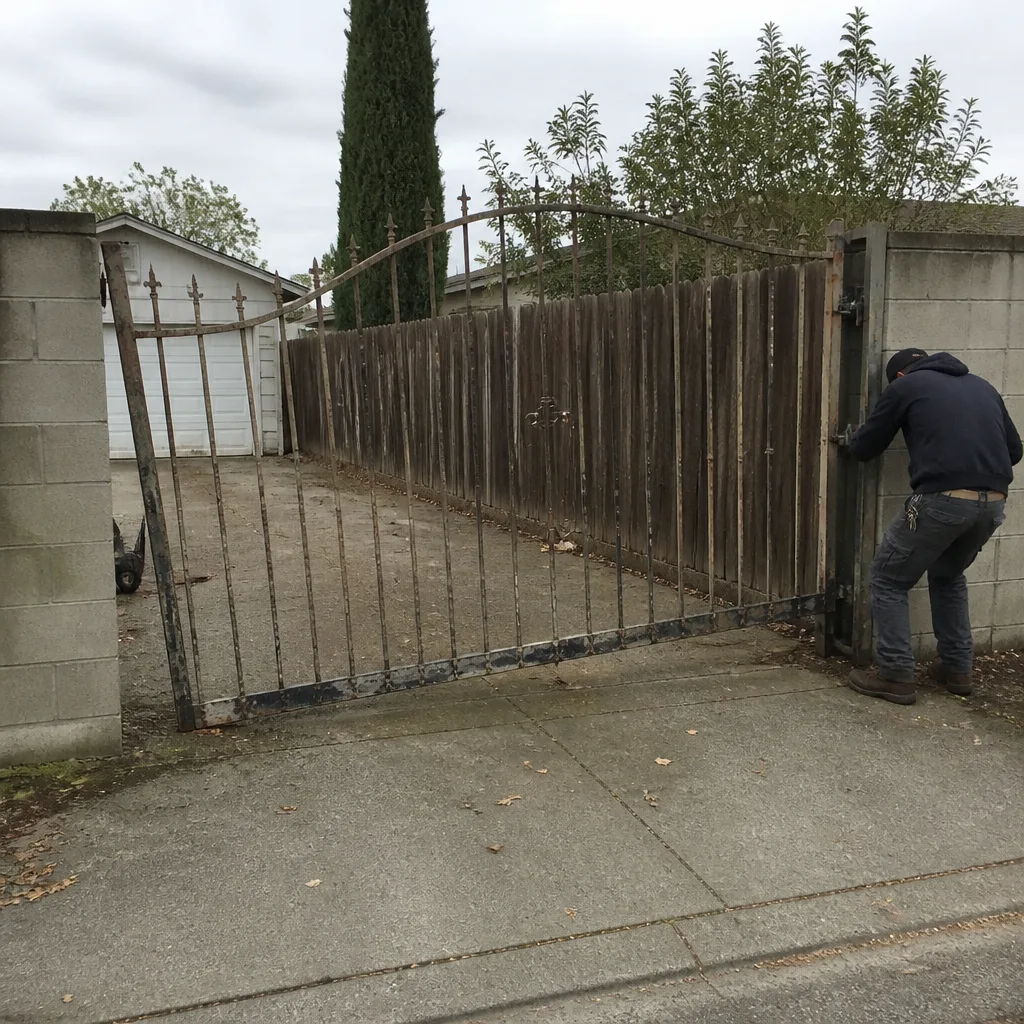 Before
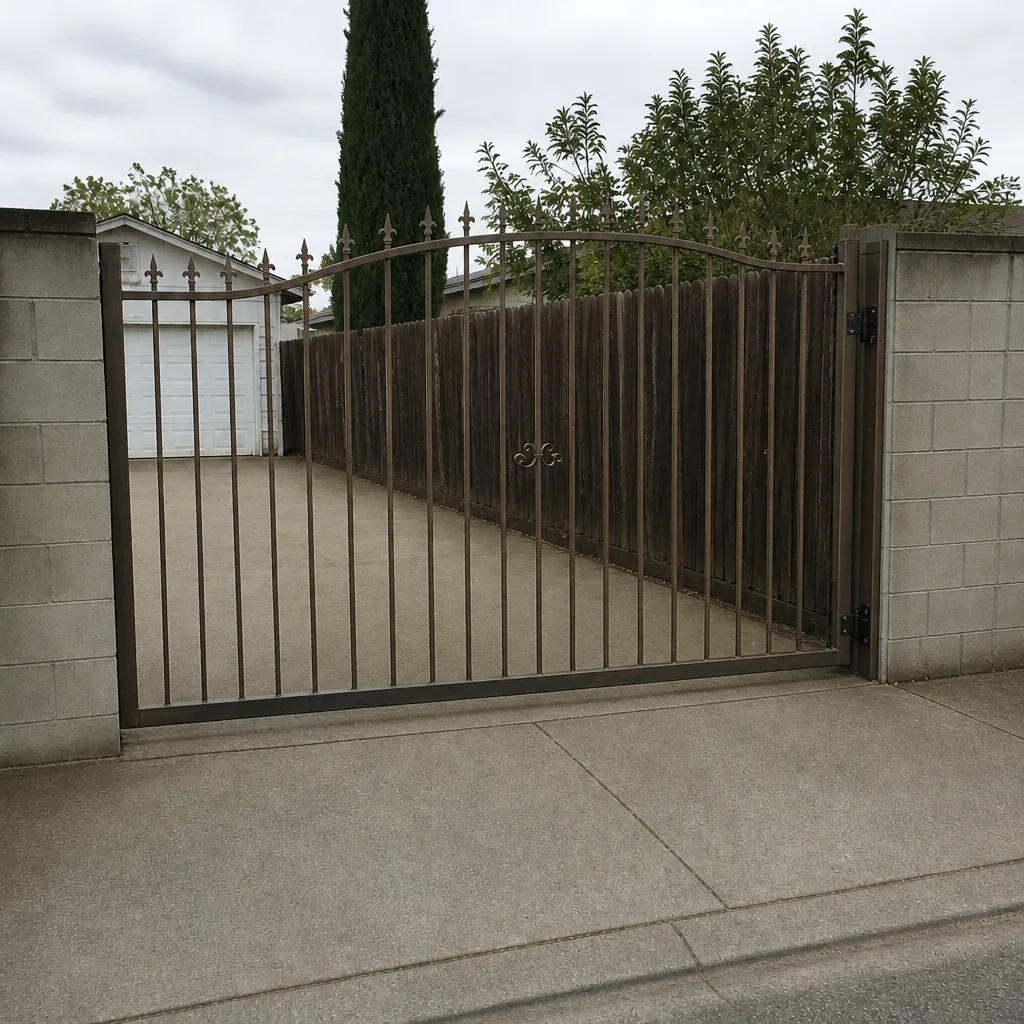 After
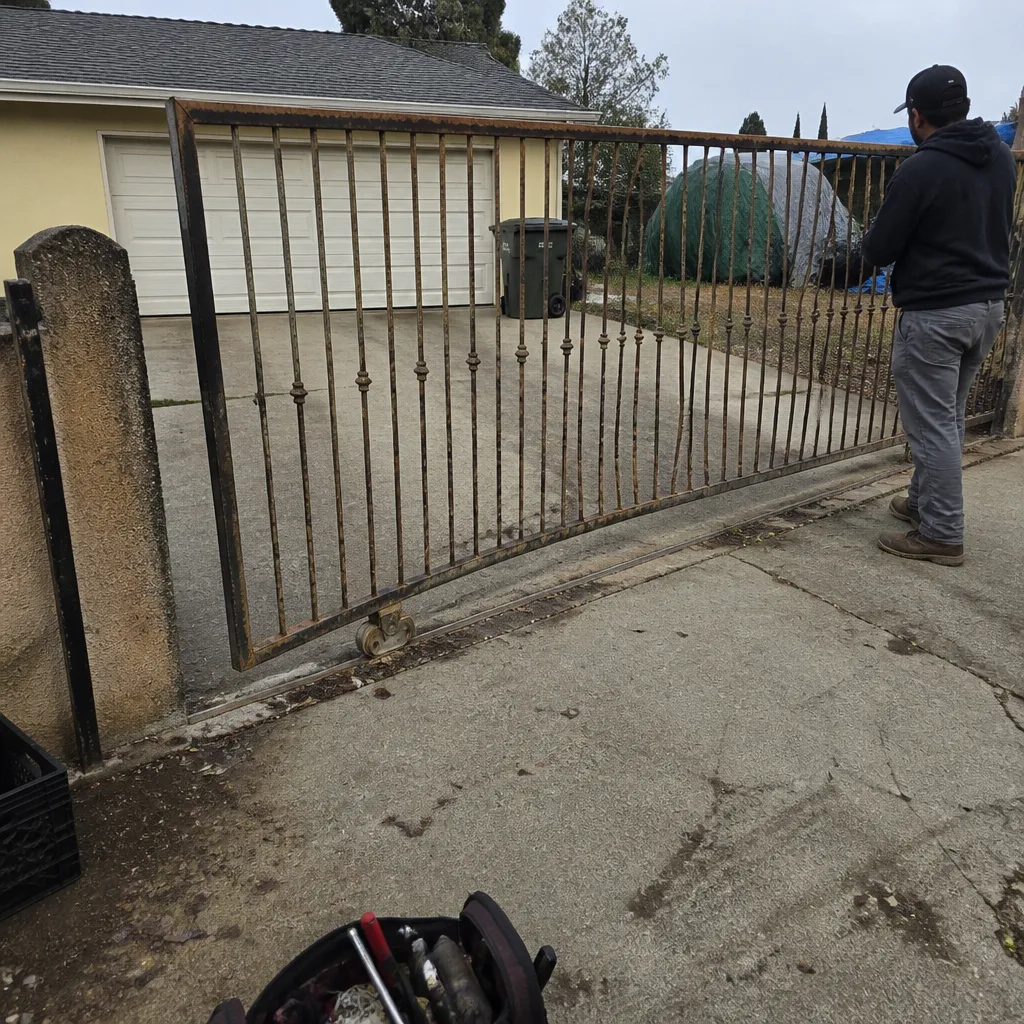 Before
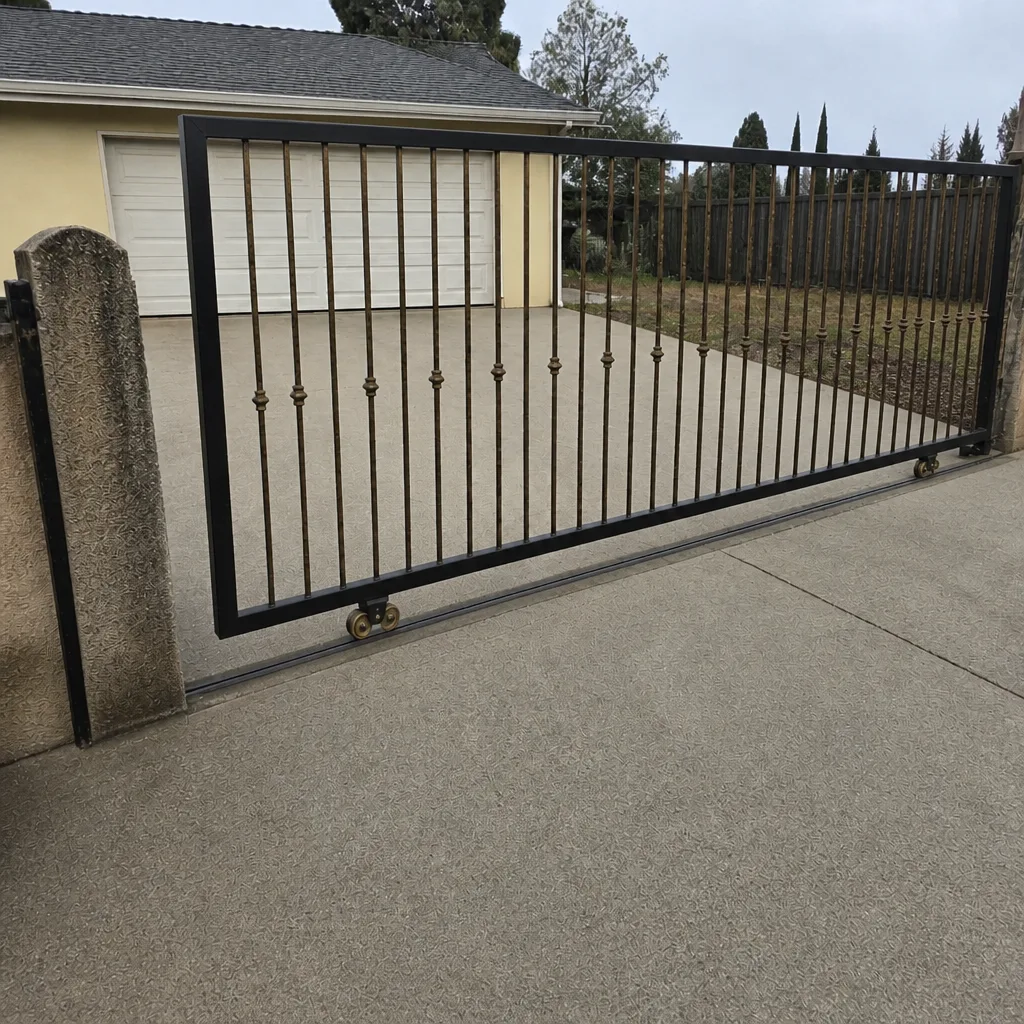 After
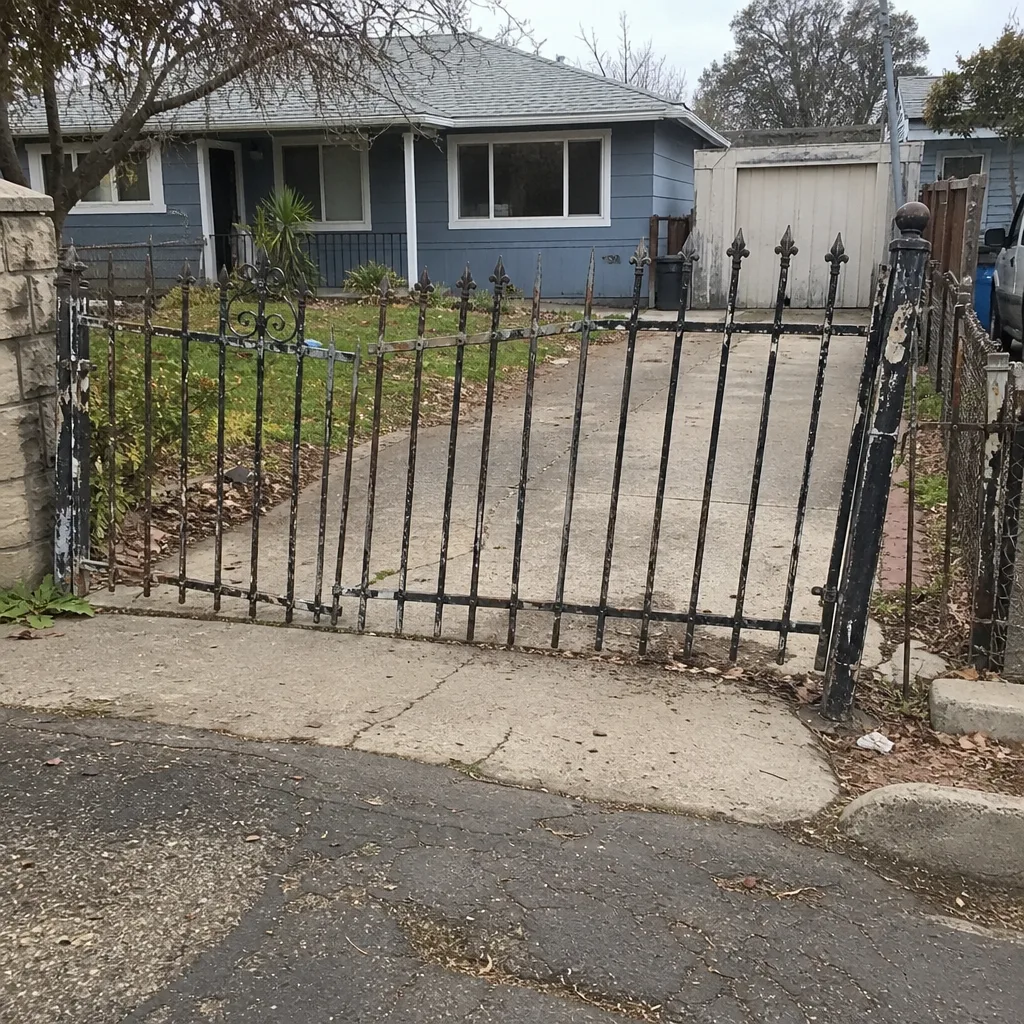 Before
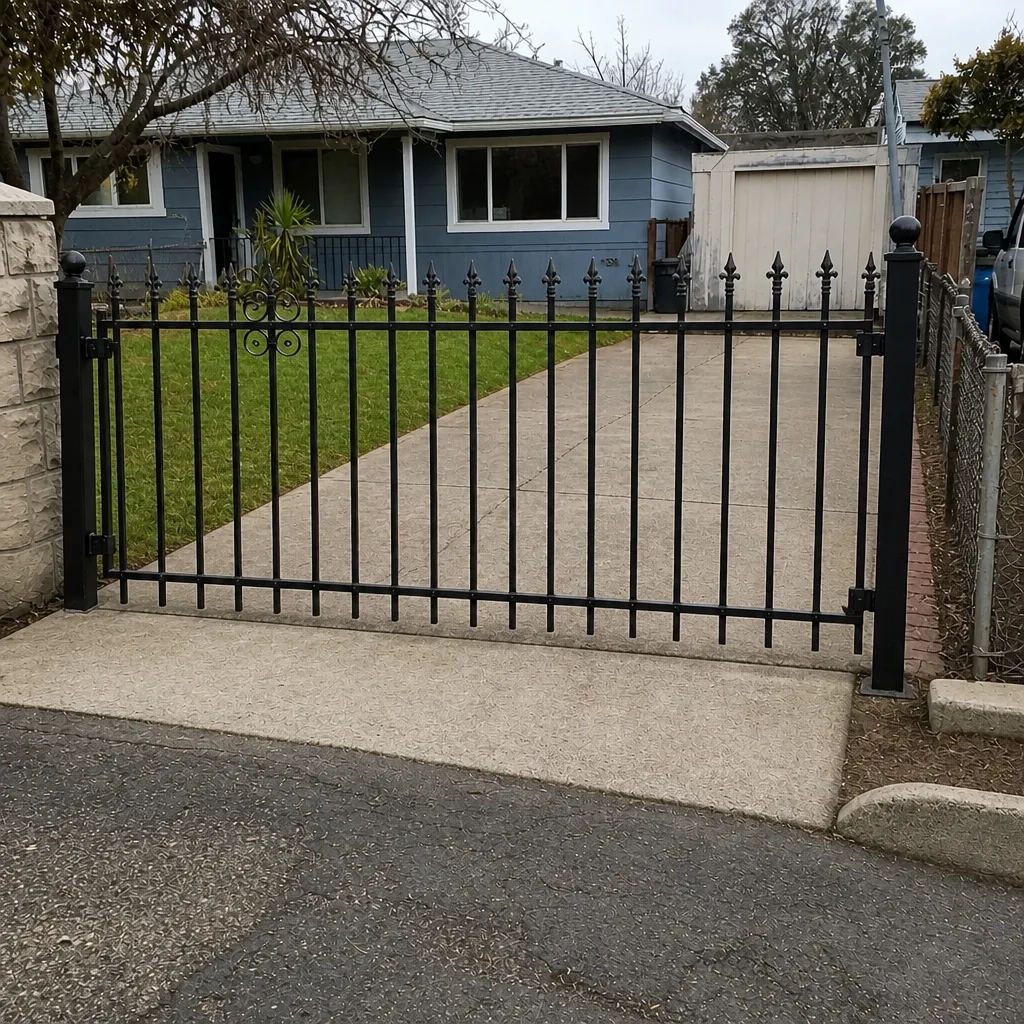 After